The 7 AI Skills Every Senior Needs Before 2027 — and How to Learn Them in One Afternoon
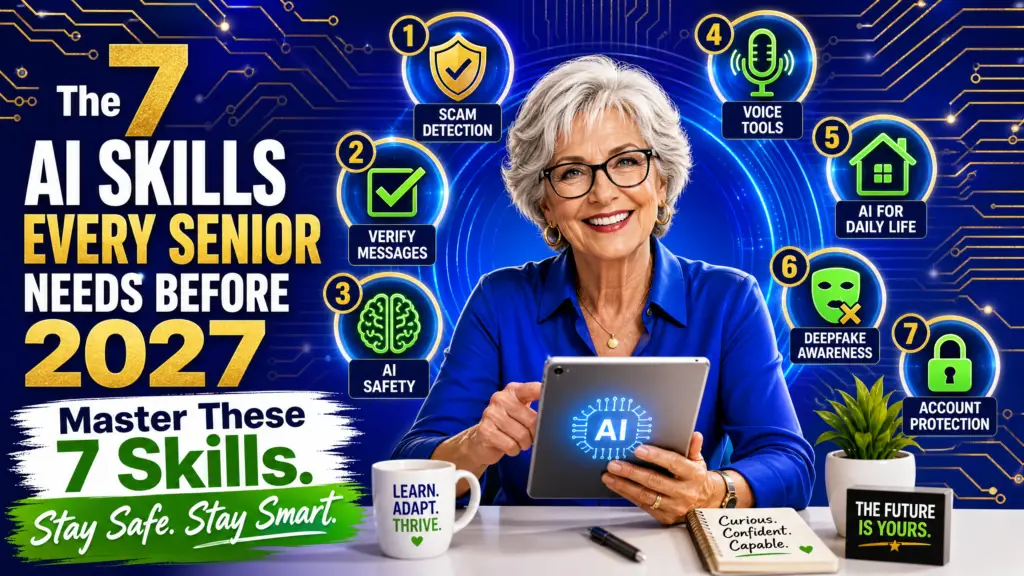
The 7 AI Skills
Technology is moving faster than ever, and artificial intelligence is at the center of this rapid transformation. By 2027, AI will be deeply integrated into banking, healthcare, customer service, and daily communication. For adults over 50, this presents a unique challenge: adapt to these new tools or risk being left behind in a digital landscape that is increasingly difficult to navigate safely.
The stakes are high. In 2025 alone, online scams cost American seniors nearly $7.75 billion, a 59% increase from the previous year [1]. Much of this fraud is driven by sophisticated AI tools that make scams harder to detect. However, AI is not just a threat; it is also a powerful tool for independence, connection, and productivity. The key is knowing how to use it.
You do not need a computer science degree to thrive in this new era. In fact, you can master the essential skills in just a few hours. This checklist outlines the seven critical AI skills every senior needs before 2027, and how platforms like SmartPromptIQ can help you learn them quickly and easily.
Skill 1: How to Spot AI-Generated Scams
The first and most important skill is recognizing when AI is being used to deceive you. Scammers use AI to write flawless phishing emails, generate fake websites, and even create deepfake audio and video. The days of spotting a scam by looking for typos are over.
To protect yourself, you must learn to identify the psychological triggers that AI scams rely on. These include creating a false sense of extreme urgency, demanding unusual payment methods (like gift cards or cryptocurrency), and insisting on secrecy. If an email from “Medicare” or your “bank” tells you to act immediately or risk losing your account, it is almost certainly an AI-generated scam. The Federal Trade Commission continually warns that legitimate government agencies will never demand immediate payment via text or email [2].
How to learn it today: Spend 15 minutes reviewing the common red flags of modern fraud. Understand that urgency is the enemy of security. When in doubt, stop, breathe, and verify.
Skill 2: How to Verify Suspicious Messages
Knowing the red flags is crucial, but what do you do when a message looks incredibly real? You need a reliable method for verifying suspicious texts, emails, and pop-ups without putting your device at risk.
Never click links or call phone numbers provided in an alarming message. Instead, navigate to the official website independently or call the number listed on the back of your credit card. For an added layer of security, use digital verification tools. The SmartPromptIQ Fraud Analyzer allows you to paste a suspicious message into a secure portal and receive an immediate, plain-language assessment of its safety. It acts as a digital second opinion, helping you separate fact from fiction.
How to learn it today: Bookmark the Fraud Analyzer on your phone and computer. Make it a habit to run any unexpected or alarming message through the tool before taking any action.
Skill 3: How to Use AI Safely and Privately
As you begin to explore AI tools for personal use, you must understand how to protect your privacy. Many free AI chatbots collect the data you input to train their models. This means you should never share sensitive personal information with an AI assistant.
Never type your Social Security number, banking details, passwords, or sensitive medical information into a public AI tool. Treat the AI like a public bulletin board. To ensure a safer experience, look for platforms that offer a dedicated “Safety Mode” or prioritize user privacy in their terms of service. Using an AI business system designed with security in mind can provide peace of mind while you explore the technology.
How to learn it today: Review the privacy settings of any AI tool you use. Commit to the rule of never sharing personally identifiable information (PII) with a chatbot.
Skill 4: How to Use Voice-Activated AI Tools
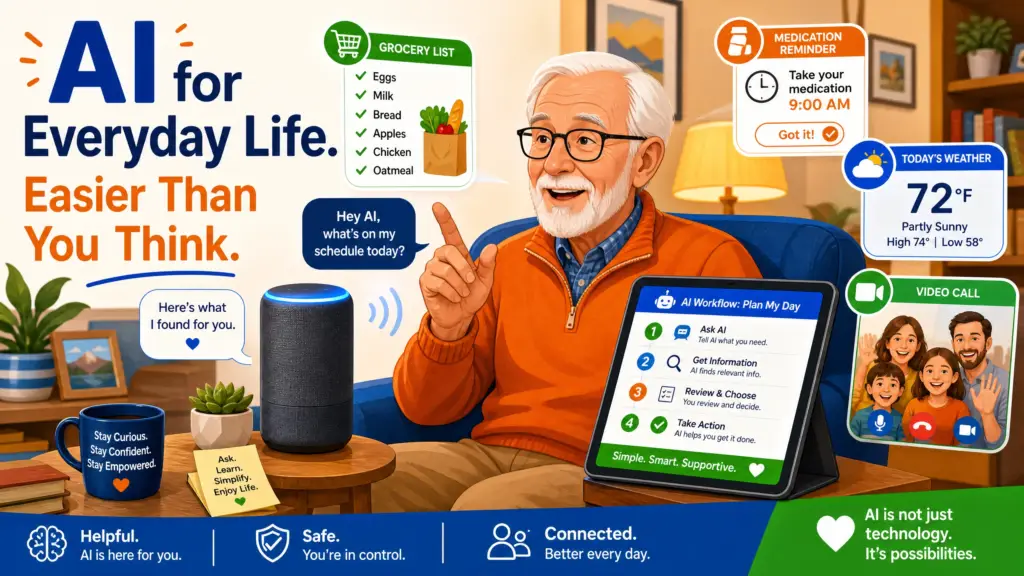
One of the greatest benefits of modern AI is that it removes the need to type on small, frustrating keyboards. Voice-activated AI tools, whether on your smartphone or a smart speaker, can significantly enhance your daily life.
You can use voice commands to set medication reminders, dictate text messages to family members, check the weather, or even ask complex questions without touching a screen. Learning to interact with AI using natural language is a game-changer for accessibility and convenience. A recent University of Michigan poll found that over half of adults age 50 and older are already using voice or text-based AI technologies for various purposes [3].
How to learn it today: Spend 20 minutes practicing voice commands with your smartphone’s built-in assistant (like Siri or Google Assistant). Start with simple requests: “Set a timer for 10 minutes” or “Remind me to call John at 3 PM.”
Skill 5: How to Use AI for Daily Life and Productivity
AI is not just for tech experts; it is an incredible tool for everyday productivity. Whether you are managing a household, planning a trip, or looking to supplement your retirement income, AI can help you accomplish tasks faster and more efficiently.
You can use AI to draft polite emails to customer service, summarize long and confusing documents, or generate ideas for a new hobby. For those interested in deeper engagement, learning to use **prompt engineering tools** can unlock even more potential. Platforms offering structured Academy lessons provide step-by-step guidance on how to write effective prompts, ensuring you get the best possible results from the AI without feeling overwhelmed.
How to learn it today: Choose one daily task—like writing an email or planning a weekly menu—and use an AI tool to help you complete it. Focus on giving the AI clear, specific instructions.
Skill 6: How to Avoid Deepfakes and Voice Cloning
The ability of AI to clone voices and create realistic fake videos (deepfakes) is perhaps the most frightening development in modern technology. Scammers use voice cloning to impersonate grandchildren in distress, demanding immediate financial help.
The most effective defense against this terrifying technology is a low-tech solution: the Family Code Word. Sit down with your family and agree on a unique, memorable word. If you ever receive a frantic call from a loved one asking for money, demand the code word. An AI clone operated by a scammer will not know it. This simple strategy can save you thousands of dollars and immense emotional distress. Reports indicate that AI voice cloning scams are costing victims millions, making this skill absolutely critical [4].
How to learn it today: Call your closest family members this afternoon and establish your Family Code Word. Agree that it will be used in any emergency situation involving money.
Skill 7: How to Protect Your Accounts with Modern Security
Finally, as AI makes it easier for hackers to guess passwords and breach accounts, you must upgrade your basic digital security. A strong password is no longer enough to protect your financial and personal data.
You must enable Two-Factor Authentication (2FA) on all your important accounts, especially your email and banking. 2FA requires a second form of verification—usually a code sent to your phone—before allowing access. Even if an AI-powered hacker steals your password, they cannot access your account without your physical phone. While this is not strictly an “AI skill,” it is a mandatory defense in an AI-driven world.
How to learn it today: Log into your primary email account and your bank account. Locate the security settings and turn on Two-Factor Authentication. It takes less than ten minutes and provides massive protection.
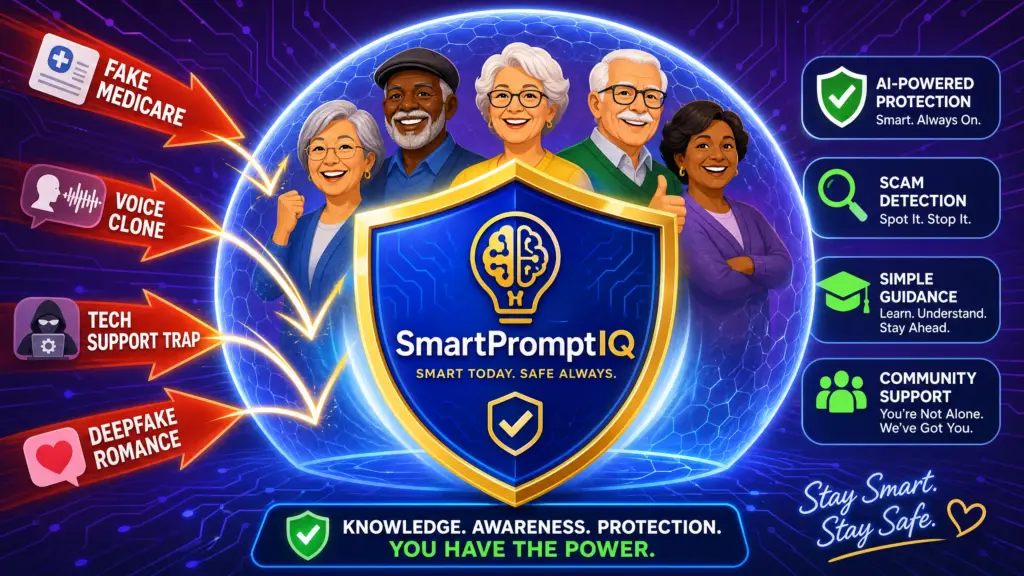
Empowerment Through Education
The digital landscape is changing, but you do not have to be a victim of that change. By mastering these seven skills, you transform yourself from a potential target into an empowered, confident digital citizen. AI should be a tool that works for you, not against you.
If you are ready to take the next step and integrate AI safely into your daily routine or small business, consider exploring an AI Staff. These managed AI assistants handle the complex technical work behind the scenes, allowing you to focus on the results. By utilizing structured **AI workflows** and accessible educational resources like SmartProTradeIQ, you can ensure that you are ready for whatever the future of technology brings.
Do not wait until 2027 to catch up. Take one afternoon, go through this checklist, and secure your digital future today.
Try SmartPromptIQ AI Staff free and Download 50 AI Staff workflows to start your journey toward confident and safe AI usage today! Explore the possibilities at SmartPromptIQ AI Staff.
References
[1] AARP: FBI Report, Internet Crime Losses Hit $20.9 Billion
[2] Federal Trade Commission: Scammers Impersonating Government Agencies
[3] University of Michigan National Poll on Healthy Aging: How Older Adults Use and Think About AI
[4] WFTV: AI Voice Cloning Scams Cost Victims Millions