The Rise of No-Code AI: How to Build Custom Workflows with BuilderIQ (No Coding Required)
Introduction: The Democratization of
Artificial Intelligence
For decades, the power to create software was gatekept by a select group of people: software engineers. If you had a brilliant idea for a digital tool, you either had to spend years learning Python or C++, or you had to spend tens of thousands of dollars hiring a development team. The artificial intelligence boom initially looked like it would follow the exact same path.
However, a massive shift is occurring in the tech landscape: the convergence of AI and the “no-code” movement. According to a recent projection by Gartner, low-code and no-code development will account for over 65% of all application development functions by the end of 2024.
We are entering an era where your ability to build powerful, automated AI tools is limited only by your imagination, not your coding ability. Enter the era of the custom AI builder. In this comprehensive guide, we will explore why generic AI chatbots are no longer enough, and how platforms like BuilderIQ are empowering non-technical founders, marketers, and operators to build their own bespoke AI applications.
The Problem with “Out-of-the-Box” AI Chatbots
When ChatGPT first launched, it was a revelation. But as businesses have integrated AI into their daily operations, the limitations of “blank canvas” chatbots have become glaringly obvious.
1. The “Blank Page” Paralysis
Every time you open a generic AI interface, you start from scratch. You have to re-explain your brand voice, your target audience, and the specific formatting you require. This repetitive setup leads to a phenomenon known as “prompt fatigue.”
2. Inconsistent Outputs
If three different employees ask a public AI model to write a customer service response, you will get three wildly different tones. This inconsistency dilutes brand identity and creates quality control nightmares for management.
3. Data Silos and Disconnected Workflows
Generic AI doesn’t naturally speak to the rest of your tech stack. It sits in a silo. You copy data from an email, paste it into the AI, copy the output, and paste it into a Google Doc. This manual friction defeats the purpose of automation.
Enter BuilderIQ: Your Personal AI Architect
To solve these problems, businesses are moving away from prompting generic models and moving toward building custom AI agents. This is exactly what BuilderIQ is designed to do.
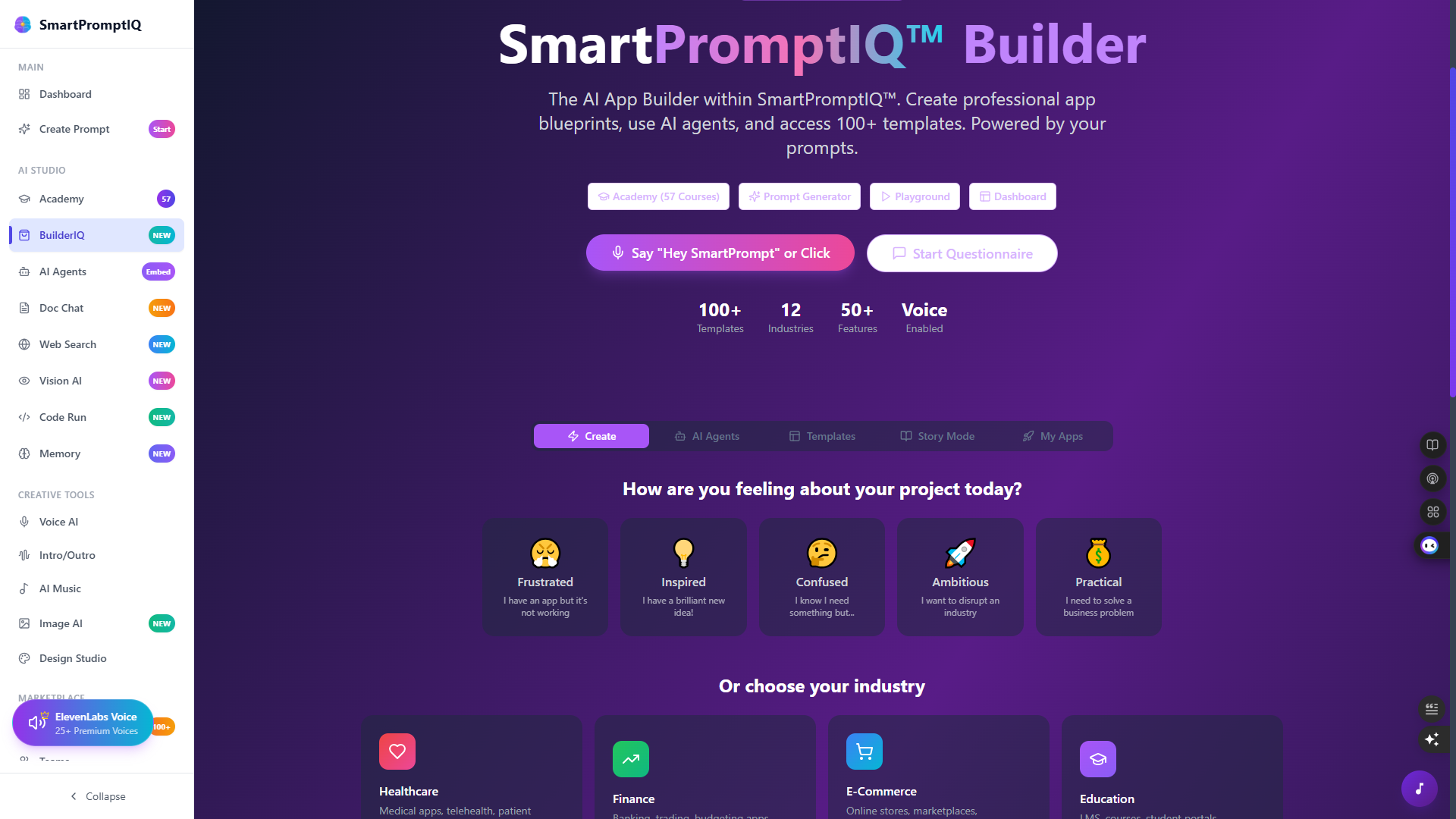
BuilderIQ is a no-code environment that allows you to pre-package complex prompt engineering, context framing, and brand constraints into a single, repeatable tool. Think of it as creating a custom app that lives on top of the world’s smartest language models.
How to Build Your First AI Tool in
BuilderIQ (Step-by-Step)
You don’t need an engineering degree to build an AI tool. Here is a look at the typical workflow a non-technical professional uses within BuilderIQ.
Step 1: Define the Core Function
Before touching the software, identify a repetitive, high-friction task in your business. For this example, let’s say you run an e-commerce store and you spend 10 hours a week writing SEO-optimized product descriptions.
Step 2: Establish the “System Context”
Inside BuilderIQ, you begin by setting the foundational knowledge of the AI. Instead of typing this every time, you hardcode it into the builder. You can define your brand archetype, paste your style guide, and tell the AI exactly who your target demographic is.
Step 3: Define the Input Fields
Instead of a scary, open-ended chatbox, BuilderIQ allows you to create specific input fields for you or your team. For our product description tool, you might create three simple fields:
- Product Name
- Key Features (bullet points)
- Target Keyword
Step 4: Design the Output Architecture
Here is where the magic happens. You instruct the builder on exactly how to format the final result. You can demand that it outputs a catchy H1 title, a 50-word emotional hook, a bulleted list of benefits, and a call-to-action—every single time.
The Business Impact of Custom AI
When you transition from “using AI” to “building with AI,” the economics of your business change drastically.
Massive Cost Savings
As noted by Forbes in their analysis of AI in the workplace, custom micro-tools reduce the need for bloated software subscriptions. Why pay $99/month for an AI copywriting tool when you can build a personalized version of it in BuilderIQ for a fraction of the cost?
Standardizing Excellence
By building a tool in BuilderIQ and sharing it with your team, you are effectively cloning your best employee. The junior copywriter and the senior marketing director will now produce the exact same high-quality output because the “guardrails” are built directly into the tool.
Conclusion: Stop Prompting, Start Building
The future belongs to the builders. The internet democratized information; social media democratized publishing; and now, platforms like BuilderIQ are democratizing software creation.
If you find yourself copying and pasting the same instructions into ChatGPT day after day, you are wasting your most valuable asset: time. It is time to graduate from a passive AI user to an active AI creator. Head over to BuilderIQ today, map out your most tedious task, and build your first custom AI workflow. You’ll wonder how you ever managed without it.