
What Is an Autonomous Agent in Artificial Intelligence?
A chatbot that answers one question at a time is certainly useful. However, an AI system that notices a problem, decides what to do next, uses tools, checks its own output, and keeps moving without constant hand-holding is something else entirely. If you are asking what is an autonomous agent in artificial intelligence, you are really asking where AI stops being a passive responder and starts behaving more like a proactive operator.
That distinction matters significantly if you want to build real systems instead of mere demos. For builders, founders, and teams shipping AI products, autonomous agents represent a monumental shift from prompting for outputs to designing for actual outcomes. The global AI agents market size is projected to grow from around $7.8 billion in 2025 to over $52 billion by 2030, highlighting the massive economic impact of this technology.
What Exactly Is an Autonomous Agent in Artificial Intelligence?
An autonomous agent in artificial intelligence is a sophisticated software system that can perceive information, make decisions, take actions, and pursue a specific goal with limited human intervention. It does not just generate a response when asked. Instead, it works through a task, often across multiple complex steps, using memory, predefined rules, external tools, and continuous feedback from its environment.
The easiest way to conceptualize it is this: a standard AI model is often like an expert you consult for advice. An autonomous agent, on the other hand, is closer to an assistant you assign a job. You give it an objective, outline the constraints, provide access to the right tools, and it figures out how to move the work forward autonomously.
That does not mean it thinks exactly like a human or operates without any boundaries. In practice, autonomy exists on a spectrum. Some agents can only complete narrow, highly defined workflows. Others can plan intricate strategies, call APIs, retrieve complex documents, write functional code, trigger external automations, and revise their own approach based on real-time results. The more decision-making authority and tool access you give the system, the more autonomous it becomes.
How Autonomous Agents Actually Work Under the Hood
Under the hood, most autonomous agents combine a powerful language model with a robust control layer. The language model handles the reasoning, interpretation, and generation of text or code. The control layer manages the overarching goals, sequencing of tasks, tool usage, memory retention, and critical safety checks.
A simple agent loop often looks like this: it receives a goal, evaluates the current state of affairs, chooses the most logical next action, uses a tool or produces an output, reviews the result of that action, and repeats the process until it reaches a predefined stopping condition. That continuous loop is what makes an agent fundamentally different from a single prompt-response exchange.
For example, imagine an agent tasked with qualifying inbound sales leads. It might read a new form submission, compare it against an ideal customer profile, search a CRM system for existing records, generate a lead score, draft a personalized follow-up message, and log the result for the sales team. None of those steps is magic on its own. The immense value comes from the seamless orchestration of these tasks.
This is also where many development teams get confused. The language model itself is not the product. The intelligent workflow structured around the model is what turns raw artificial intelligence into highly useful, autonomous behavior.
The Core Building Blocks of AI Agents
Most effective autonomous agents rely on a small but critical set of architectural components.
The first component is goal definition. The agent needs a crystal-clear target, such as summarizing customer calls, triaging support requests, or researching market competitors. Vague goals inevitably produce vague, unhelpful behavior.
The second is memory or state. An agent has to keep meticulous track of what happened, what it learned from previous actions, and what still needs to be accomplished. Without memory, it essentially starts from zero every single time.
The third is tool access. Agents become exponentially more useful when they can search external databases, call APIs, send emails or messages, update system records, browse extensive documents, or trigger complex external workflows.
The fourth is decision logic. This can be relatively lightweight, such as simple instructions and thresholds, or highly structured, with advanced planning modules, rigorous validators, and complex branching conditions.
The fifth is feedback mechanisms. Strong, reliable agents do not just act blindly. They rigorously evaluate whether their action worked as intended and adapt their strategy if it did not.
Autonomous Agent vs Chatbot vs Workflow: Understanding the Difference
A lot of software products use these terms interchangeably and loosely, but the precise differences matter significantly when you are building robust systems.
A chatbot is usually conversational by nature. It waits patiently for user input and returns a direct answer. It may be smart, highly personalized, and very useful, but it remains mostly reactive.
A workflow is usually strictly deterministic. If X happens, then do Y. Workflows are excellent and highly efficient when the business process is entirely stable and predictable.
An autonomous agent sits dynamically between and beyond those two categories. It can reason inside a workflow, intelligently decide among multiple potential paths, and act with a significant degree of independence. It is not fully open-ended artificial general intelligence, and it certainly should not be treated that way. But it is vastly more adaptive than a fixed automation and much more action-oriented than a standard chatbot.
This is precisely why agent design is not just a prompt engineering problem. It is a comprehensive systems design problem. You are meticulously defining goals, boundaries, inputs, outputs, necessary tools, review loops, and robust failure handling protocols.
Where Autonomous Agents Make the Most Sense
The strongest and most profitable use cases for autonomous agents typically share three distinct qualities: the task involves multiple steps, the operating environment changes frequently, and the business value of faster execution is exceptionally high.
Sales operations is a prime example. An intelligent agent can enrich inbound leads, prioritize high-value accounts, draft personalized outreach emails, and automatically update CRM records. Marketing is another excellent area. Agents can independently research trending topics, generate comprehensive content outlines, analyze campaign performance trends, and repurpose creative assets for entirely different social channels.
Customer support works exceptionally well when the agent can accurately classify incoming requests, retrieve relevant policy information from a knowledge base, suggest the best next actions, and intelligently escalate complex edge cases to human operators. Internal business operations also benefit massively. Forward-thinking teams use agents for technical documentation, detailed meeting follow-ups, SOP generation, complex data extraction, and seamless project coordination.
Software engineering teams are pushing this paradigm even further with advanced coding agents that can inspect code repositories, propose architectural fixes, write comprehensive unit tests, and even open pull requests independently. These systems can create serious leverage for developers, but they inherently need tighter review processes and stricter permissions than a simple content generation agent would.
The overarching pattern is quite simple: autonomous agents are incredibly valuable when there is enough inherent complexity to justify reasoning, but enough structural framework to keep the system safely grounded.
Where Autonomous Agents Break Down
This is exactly where execution-focused engineering teams separate themselves from the industry hype.
Agents struggle mightily when overarching goals are unclear, source data is highly unreliable, or ultimate success is hard to accurately measure. They also break down rapidly when you give them overly broad authority without necessary guardrails. The more external tools and autonomy you add to a system, the more critically important system observability becomes.
There is also a constant trade-off between flexibility and predictability. A highly scripted, deterministic workflow is much easier to test, verify, and trust, but it is far less adaptive to change. A more autonomous agent can handle variability and edge cases better, but it may behave in novel ways you did not fully anticipate during design.
Cost is another major factor to consider. Every extra reasoning step in an agent loop can significantly increase latency and API token usage. If a simpler, traditional automation solves the business problem effectively, that is usually the better, more cost-efficient build.
And then there is the crucial human factor. Some critical tasks should simply never be fully delegated to machines. Legal contract review, sensitive financial actions and trading, crucial hiring decisions, and critical clinical medical recommendations all require much stricter human oversight. The level of autonomy should always perfectly match the level of risk involved.
How to Think Like a Builder When Designing Agents
If you genuinely want to move from casual curiosity to actual enterprise deployment, start with one highly concrete job. Do not begin with a vague mandate to “build an AI employee.” Begin with a specific goal like “reduce first-response time for tier-1 support tickets” or “turn raw sales call transcripts into structured, CRM-ready notes.”
From there, map out the task exactly like a human operator would. What specific event triggers the process? What historical context does the agent absolutely need? Which specific tools or APIs should it access? What decisions can it safely make alone, and where should a human manager explicitly approve the action? What does ultimate success actually look like?
This is the fundamental difference between merely experimenting with AI and building scalable systems with AI. Strong, reliable agent systems are carefully scoped, heavily instrumented, and constantly measured.
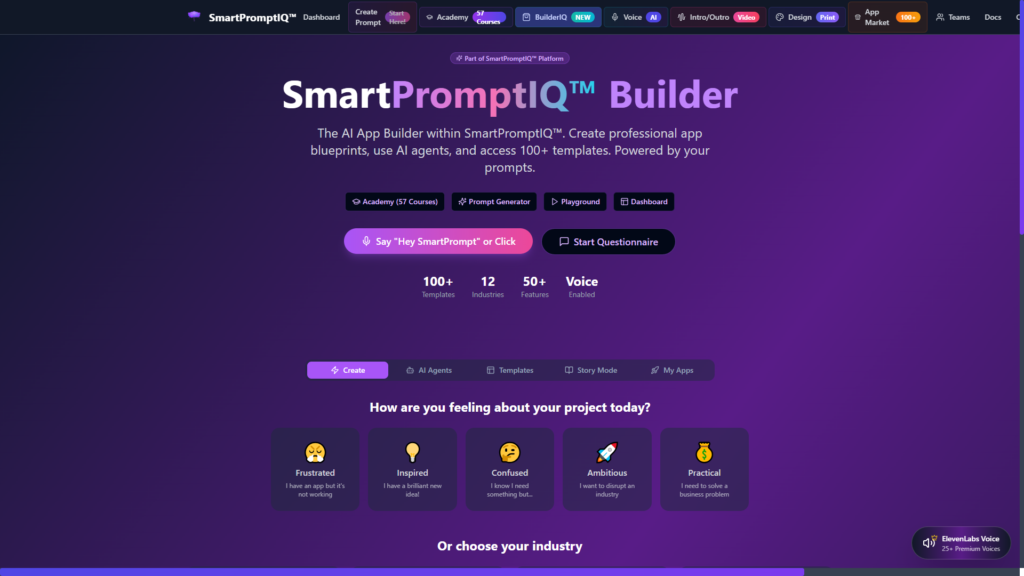
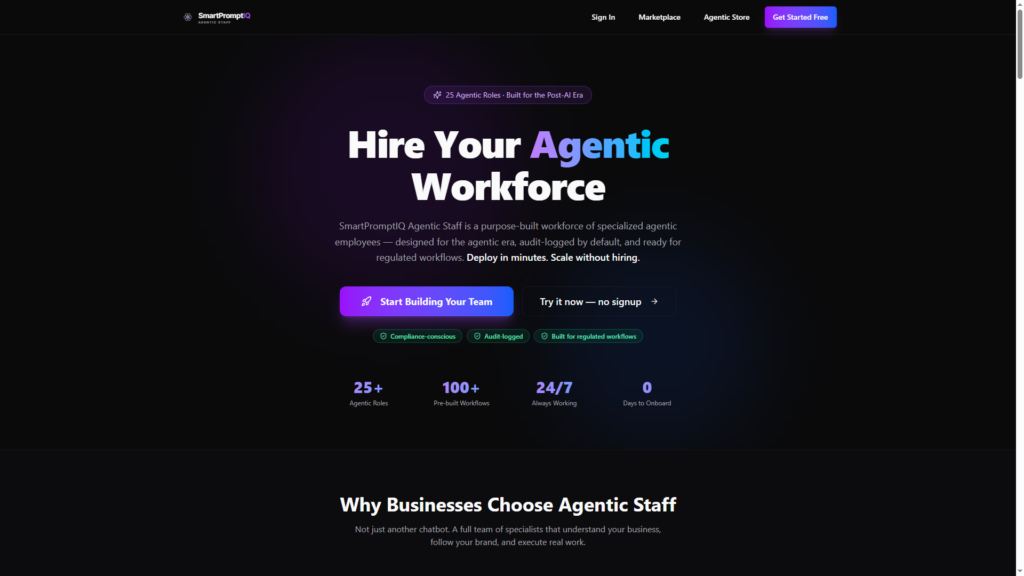
At platforms like SmartPromptIQ and SmartPromptAgents, that rigorous builder mindset is the real competitive advantage. Learning the theoretical concept matters, but turning it into a robust, working architecture is what creates true business leverage. An agent is only truly useful when it fits seamlessly into a real workflow, utilizes the right prompt system, and can be deployed in a secure way that your team can fully trust.
What Is an Autonomous Agent in Artificial Intelligence Really Worth?
Its ultimate value is not that it looks highly impressive in a controlled demo environment. Its true value is that it drastically compresses the distance and time between a business decision and actual execution.
When an autonomous agent is designed exceptionally well, it reduces tedious manual coordination, speeds up repetitive cognitive work, and helps a small, agile team operate with significantly more reach and impact. It can effectively turn a pile of disconnected, manual prompts into an actual, cohesive system that gets real work done autonomously.
But the strongest, most successful teams stay clear-eyed and pragmatic. Not every single business problem needs a complex agent. Sometimes a well-crafted prompt is more than enough. Sometimes a fixed, deterministic workflow is much smarter and cheaper. The real win comes from intelligently choosing the right level of autonomy for the specific job at hand, and then designing it with rigorous engineering discipline.
If you maintain that pragmatic lens, autonomous agents stop being just another tech buzzword and start becoming exactly what they should be: highly practical, transformative infrastructure for getting meaningful work done much faster.
To learn more about leveraging AI for your business, explore resources at SmartPromptiq pro and smartpromptiq-staff
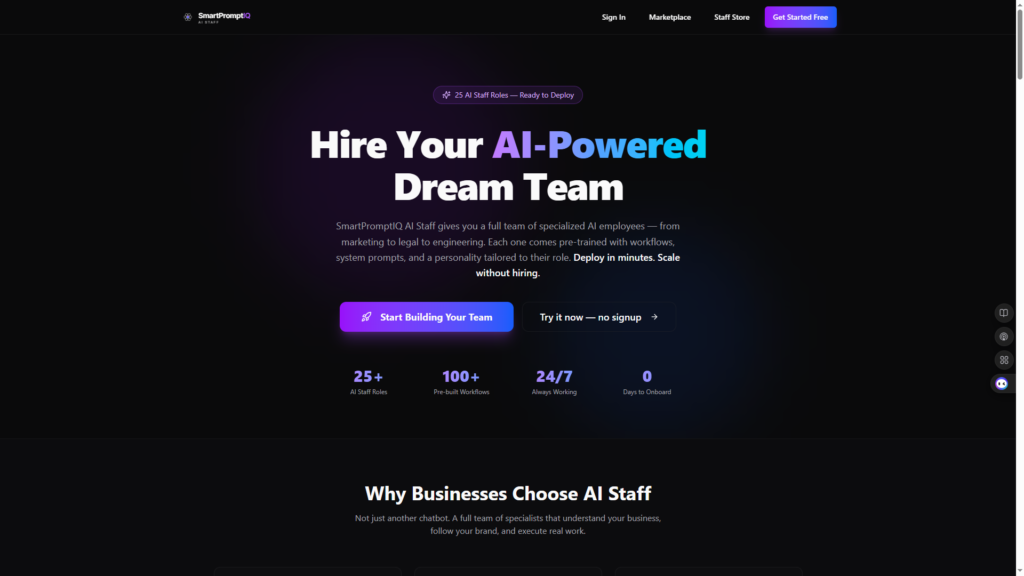
discover how to optimize your workflows with smartpromptiq-staff For advanced AI staffing solutions, check out AI Staff.