
How to Turn Prompts Into AI Products
A good prompt can get an impressive output in 30 seconds. A real product has to keep working on day 30, day 300, and after the first unhappy customer shows up with an edge case you never considered. That is the gap most builders hit when they try to turn prompts into AI products.
The prompt is not the product. It is the starting logic. What matters next is everything around it: the user flow, the model behavior, the failure states, the handoffs, the pricing, and the system that makes the experience repeatable for someone other than you.
If you are an entrepreneur, operator, creator, or technical builder, this is where momentum usually gets lost. You have a strong idea, maybe even a prompt that performs well in a chat window, but translating that into something people can actually use feels bigger than expected. The good news is that the leap is smaller once you stop treating prompts like finished assets and start treating them like product components.
What it really means to turn prompts into AI products
When people say they want to build an AI product, they often mean one of two things. Either they want to package a useful outcome around a model, or they want to automate a task that currently depends on human judgment. In both cases, the prompt is only one layer in the stack.
A real AI product needs a defined user, a clear job to be done, and a structured interaction pattern. It also needs rules. What should happen when the input is vague? What if the model is wrong? What if the user needs a faster answer instead of a more creative one? These are product questions, not prompt questions.
That distinction matters because strong prompting alone does not create reliability. A prompt can produce brilliance and still fail as a business asset if the output is inconsistent, hard to validate, or too expensive to run at scale. The builders who move fastest are the ones who design the system around the prompt from the beginning.
Start with the outcome, not the clever prompt
The fastest way to waste time is to obsess over prompt wording before defining the business outcome. A better approach is to start with one simple question: what job will this product complete better, faster, or cheaper than the current alternative?
If your answer is vague, the product will be vague. “Help with marketing” is not enough. “Generate three on-brand email variations for ecommerce product launches with editable subject lines and CTAs” is much closer. The tighter the outcome, the easier it is to shape the prompt system, interface, and quality checks around it.
This is also where many builders overbuild too early. You do not need a general-purpose AI assistant if your market only needs a proposal generator for agencies, a call summarizer for sales teams, or a lesson planner for tutors. Narrow products are often easier to validate, easier to price, and easier to improve.
The core layers behind prompt-based products
To turn prompts into AI products, you need to think in layers rather than in one giant instruction block.
The first layer is input design. What information does the user need to provide for the output to be useful? Free-text input feels flexible, but too much freedom often creates messy results. Good products guide the user with fields, examples, defaults, and constraints.
The second layer is prompt architecture. This is where you define role, task, context, style, output format, and fallback behavior. For simple use cases, one prompt may be enough. For more advanced products, you may need chained prompts, retrieval steps, agent logic, or routing rules based on the user request.
The third layer is output handling. What happens after the model responds? Can the output be edited, scored, transformed, exported, or sent into another workflow? This is where product value compounds. The more useful the output becomes inside a workflow, the less your tool feels like a chat wrapper.
The fourth layer is evaluation. You need a way to check whether the system is doing its job. That might mean human review, automatic scoring, comparison against examples, or simple pass-fail criteria tied to the use case. Without evaluation, you are guessing.
The fifth layer is delivery. This includes the interface, the speed, the pricing model, and the context in which people use the tool. An internal workflow assistant for an ops team should not feel like a consumer writing app. The same model can serve both, but the product should not.
How to turn prompts into AI products that people will pay for
There is a practical sequence that works well for most builders.
First, validate the use case manually. Before you invest in interfaces and automations, test your prompt with real examples. Run it across different user scenarios. Look for patterns in what breaks. If you cannot get consistent value manually, productizing it will not fix the problem.
Second, standardize the successful cases. Identify what the best inputs have in common and build that into the product experience. This is where you create templates, input fields, dropdowns, presets, and examples. Product quality often improves when user freedom is reduced in the right places.
Third, define acceptable output quality. Not every use case needs perfect accuracy, but every use case needs a threshold. A brainstorming tool can tolerate variation. A compliance assistant cannot. Your quality bar should shape the model choice, prompt depth, validation method, and user messaging.
Fourth, build the surrounding workflow. Ask what users need before and after generation. Maybe they need to upload source material, review draft variants, trigger approvals, or publish outputs to another system. The prompt creates the core result, but workflow creates retention.
Fifth, price the value, not the novelty. Users do not pay because AI is involved. They pay because time is saved, revenue is created, mistakes are reduced, or capacity expands. If your pricing depends on people being impressed by the model, you are vulnerable. If it depends on measurable outcomes, you have a stronger business.
Where most prompt-based products fail
Many early AI products collapse for predictable reasons.
One common issue is overreliance on one perfect prompt. In practice, users are messy. Their inputs vary, their goals shift, and edge cases show up quickly. Systems built around a single brittle prompt tend to break under real usage.
Another issue is weak onboarding. Builders often assume users will know how to interact with the system because they understand prompting themselves. Most users do not. They need guidance, examples, and a reason to trust the output.
There is also a tendency to confuse output length with value. Longer outputs are not necessarily better outputs. Often the best product decision is to make the AI more constrained, more structured, and more focused on the next action.
Then there is the monetization trap. Some builders create tools that are interesting but not operationally necessary. If the product is a nice-to-have toy, usage may spike early and disappear fast. Products that survive usually sit close to money, time, risk, or recurring pain.
It depends: choosing the right product type
Not every prompt should become a standalone app. Sometimes the better move is a workflow tool, an internal assistant, a niche agent, or a service layer.
If the use case is simple and repeatable, a focused app can work well. If the use case involves multiple decisions, changing context, and back-and-forth logic, an agent or structured workflow may be a better fit. If the user only needs occasional help, embedding AI into an existing process may outperform launching a new product entirely.
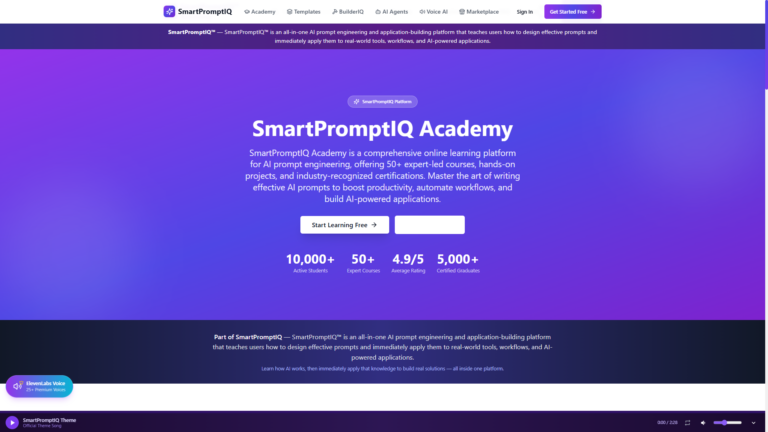
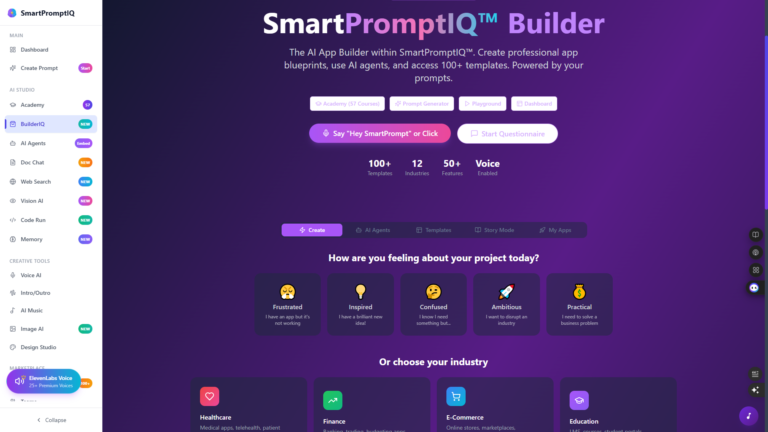
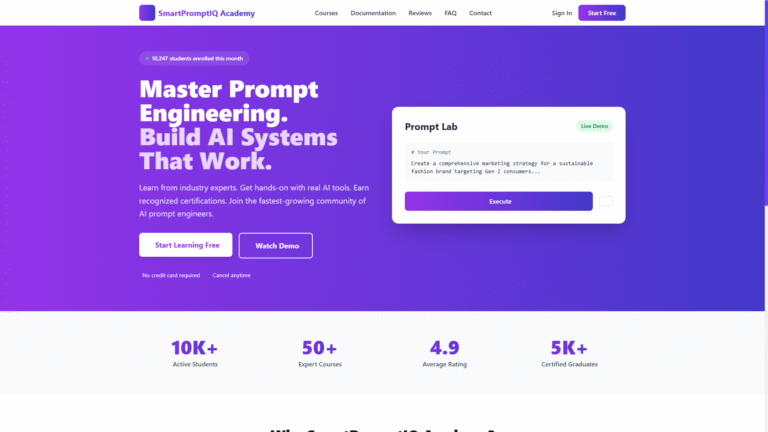
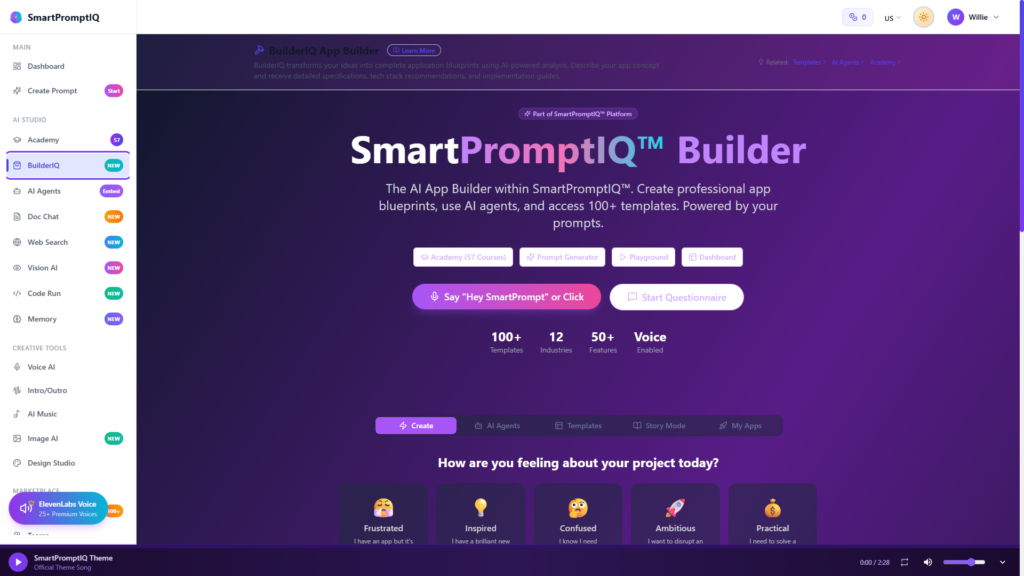
This is where execution-focused platforms have an advantage. The strongest path is rarely just education or just tooling. It is the combination of learning how prompt systems work and then translating that understanding into blueprints, workflows, and deployable architecture. That is the gap many builders are trying to close, and it is why ecosystems like SmartPromptIQ resonate with people who want more than prompt tricks.
Build for reliability before scale
A small reliable product beats a larger unstable one. That sounds obvious, but AI builders still skip this step because the model demo looks good enough.
Before you scale, pressure-test the system. Try bad inputs. Try incomplete inputs. Try users who misunderstand the feature. Measure cost per task. Review outputs for drift. Decide where human oversight is still needed. Reliability is not glamorous, but it is what turns an AI experiment into a product people keep using.
It also gives you better feedback. Once your system behaves consistently, you can tell whether the issue is market demand, user experience, pricing, or prompt logic. If everything is changing at once, you learn nothing.
The real opportunity behind prompt-based products
The opportunity is not in selling prompts as static assets. That market gets crowded fast, and copycats move faster than ever. The opportunity is in building systems that transform raw model capability into repeatable business outcomes.
That shift changes how you think. You stop asking, “How good is my prompt?” and start asking, “How dependable is the result for this user, in this workflow, at this price point?” That is a much better question. It leads to stronger products, clearer positioning, and smarter execution.
If you want to turn prompts into AI products, think like a builder, not a prompt collector. Start narrow. Design the workflow. Test for failure. Package the outcome. Then keep improving the system until the user no longer cares how the AI works – only that it works when they need it.