AI Courses for Beginners: How to Build Skills You Can Use Every Day
Artificial intelligence is becoming part of everyday life. It can help people write clearer emails, organize ideas, learn new topics, plan projects, and create first drafts. Yet many people still feel unsure about where to begin. The language around AI can sound complicated, new tools appear constantly, and it is easy to assume that only technical people can benefit.
The right AI course gives you a clear starting point, useful examples, and a simple path to follow. You learn the basics, practice on realistic tasks, and build confidence one step at a time. For beginners, the goal is to use AI thoughtfully and get better results from today’s tools.
Why AI Courses Matter Now
AI tools can generate a lot of information quickly, but they still need human direction. A vague question often produces a vague answer. A useful course teaches you how to explain your goal, add context, ask for the right format, and evaluate the result before you use it. Those are practical communication skills, not technical tricks.
For example, asking an AI tool to “write a post” leaves many details unanswered. A course can show you how to specify the audience, purpose, length, tone, and desired action, producing a stronger first draft for almost any task.
Learning with structure also saves time. Random experimentation can be helpful, but it often creates confusion. You may not know which tool to try, what to ask, or why one response is better than another. A guided course brings those ideas into a logical sequence, so each new skill builds on the last.
Start with Practical Skills, Not Technical Jargon
Good AI courses for beginners should make the subject feel approachable. You do not need to begin with complex terms or advanced software. Start with the skills that have an immediate payoff: asking clearer questions, requesting a useful format, reviewing information, and improving an answer through follow-up prompts.
Imagine you want help planning a community event. Rather than asking AI to “plan an event,” you can tell it the type of event, expected attendance, budget, timeline, and desired outcome. You can then ask for a checklist, a simple schedule, or a list of questions to consider. The AI becomes more useful because you have explained the task in a way it can understand.
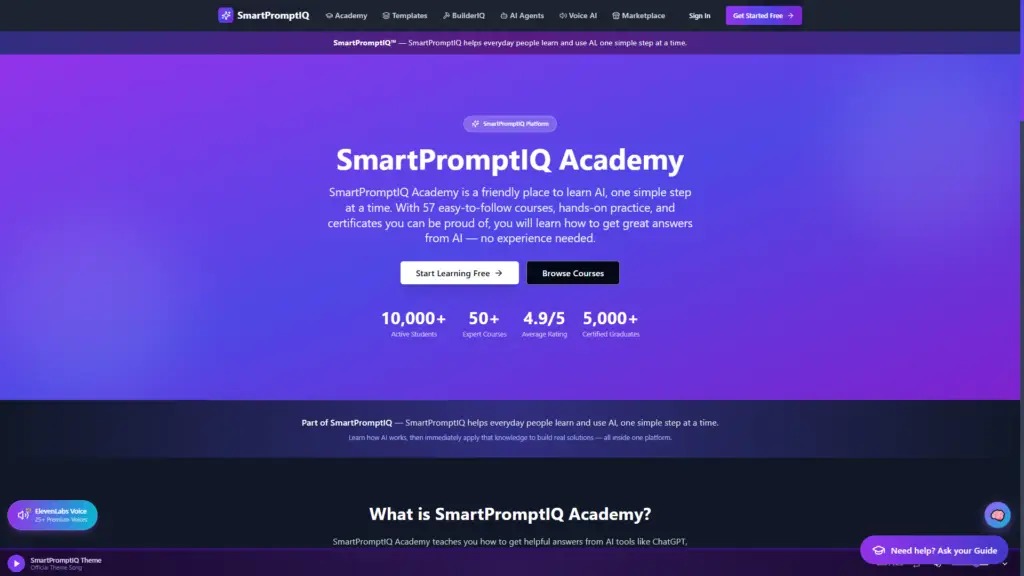
SmartPromptIQ Academy is designed around that practical approach. Its courses help learners use AI tools in plain language, apply ideas straight away, and move at a comfortable pace. This is especially valuable for people who want real-world skills without feeling overwhelmed by technology.
Learn by Doing, Then Improve Your Results
Watching a lesson can introduce an idea, but practice is what makes it useful. The most effective AI courses include opportunities to try prompts, compare outputs, and make improvements. This turns learning into an active process rather than something you simply read about.
A simple practice cycle works well for almost any task: give the AI a clear instruction, identify what is missing, revise the prompt with better context or format, and compare the new answer. Each round shows how small changes improve a result.
Over time, you can save the prompts that work well and build a personal library for recurring tasks. You might keep one prompt for turning meeting notes into action items, another for drafting a professional email, and another for creating a weekly content outline. These reusable starting points can make everyday work faster while keeping you in control of the final result.
Choose Courses That Fit Your Goals
People need AI for different reasons. Students may want help with a difficult subject, job seekers may prepare for interviews, marketers may refine copy, and small-business owners may respond to customers or organize information faster.
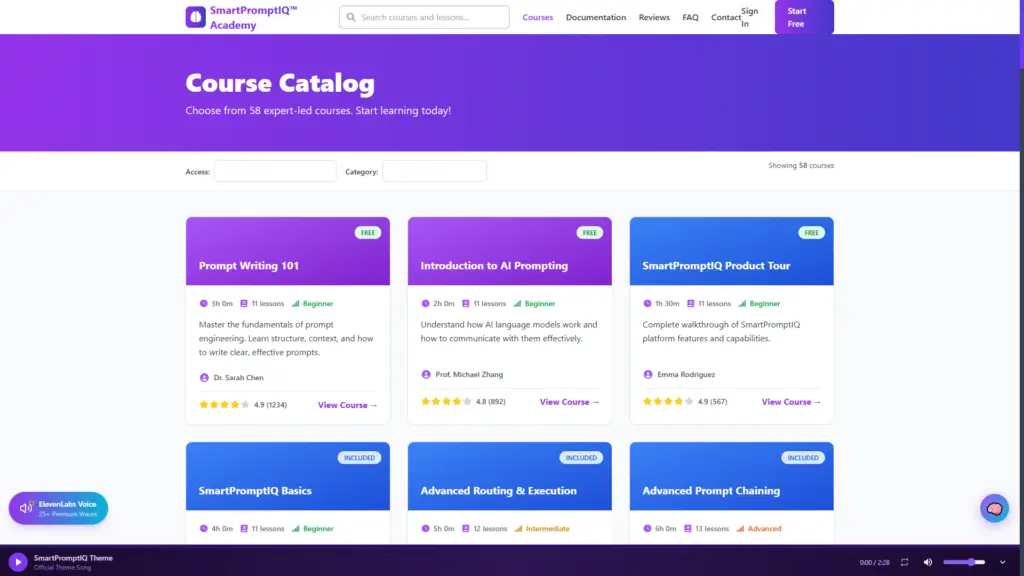
That is why a useful course catalog offers more than one path. Start with foundation lessons if you are new to AI, then choose topics that connect with your goals. You might explore prompt writing, business productivity, content creation, creative projects, or AI-supported workflows. A clear learning path makes it easier to see what to study next without trying to master everything at once.
At SmartPromptIQ Academy, learners can explore beginner-friendly courses alongside more focused applications. The platform is built to help people connect new AI skills to the tasks they already do, whether that means creating better content, planning a project, or working more efficiently.
Build Confidence Without Needing to Code
One of the most common questions about AI courses is whether coding experience is required. For many practical uses, it is not. You can learn to communicate with AI tools, review their answers, and apply them to everyday tasks without writing a line of code.
That does not make the learning superficial. Clear prompting, careful review, and responsible use are valuable skills. Asking for what you need, improving weak answers, and protecting private information are habits that matter in every setting.
The key is to focus on progress rather than perfection. Your first prompt may not be ideal, and that is normal. Learning how to revise it is part of the skill. With guided practice, AI becomes less intimidating and more like a useful assistant you can direct with confidence.
Turn Learning into Real-World Results
AI courses are most valuable when they lead to a practical outcome. That result may be a better customer message, an organized plan, a polished first draft, or a quicker way to work through routine information. Small improvements can create meaningful momentum because they show exactly where AI fits into your life or work.
For example, a local business owner could create a set of prompts to answer frequently asked questions in a consistent voice. A career changer could use AI to identify transferable skills and prepare for an interview. A volunteer could turn scattered notes into a clear event checklist. Each project creates a useful result while reinforcing the same underlying skills.
Practical projects also help you build a portfolio of what you can do. You do not need a complex technical project to demonstrate AI confidence. A well-designed workflow, a set of reusable prompts, or a thoughtful content plan can show that you understand how to use AI responsibly and effectively.
Keep Learning as AI Changes
AI tools will change, but core skills remain: define a goal, provide context, request a format, check an answer, and improve a prompt. These habits help you adapt across tools.
Continuous learning does not require hours of study. Choose one task to improve, practice a new prompt structure, or complete a short lesson that solves a current problem. Consistent application makes AI feel more natural.
Take Your First Step with an AI Course
The best time to begin is when you have a task you would like to make easier. Start with a beginner-friendly lesson and try it on a real problem.
If you want AI courses that are practical, approachable, and focused on real-world use, explore SmartPromptIQ Academy. Learn the fundamentals, practice with purpose, and build skills that help you get more from AI—one simple step at a time.