
How to Learn Artificial Intelligence: A Beginner’s Guide That Actually Works
If you have been wondering how to learn artificial intelligence, you are not alone. AI is showing up everywhere—from the tools people use to write emails and organize projects to the systems that help businesses answer customer questions. That visibility can make AI feel exciting, but it can also make it feel overwhelming. New apps, unfamiliar terms, and big promises can leave beginners wondering where to start.
You do not need a computer science degree or coding background to begin. Learning artificial intelligence starts with small tasks and grows through useful skills. The goal is to use AI thoughtfully, ask better questions, and turn good ideas into practical results.
Start with What AI Can Do for You
Before choosing a course or tool, think about the tasks you already do. Perhaps you write messages, plan events, create documents, organize notes, learn new subjects, or look for ideas. AI can support many of these activities by giving you a starting point, summarizing information, suggesting options, or helping you shape a first draft.
For example, ask an AI tool to explain a complicated topic in plain language, turn errands into a weekly plan, or draft a friendly customer reply. These tasks teach an important lesson: AI works best when it has a clear goal, audience, and requested format.
Starting with familiar tasks removes the pressure. You are not learning AI in the abstract; you are learning how it can make a real part of your day easier. Those early wins create the confidence to explore more.
Learn the Basics in Plain Language
Artificial intelligence can sound complicated because people often use technical language. Start with a simple idea: AI tools use patterns in information to generate an answer, suggestion, image, or plan. They are helpful assistants, not perfect experts, so important information still needs to be checked.
That is why your role matters. You bring the goal, the context, and the judgment. AI helps you move from a blank page to a useful first version. You decide whether the answer is accurate, appropriate, and worth using. Understanding this balance is one of the most important early steps in learning AI.
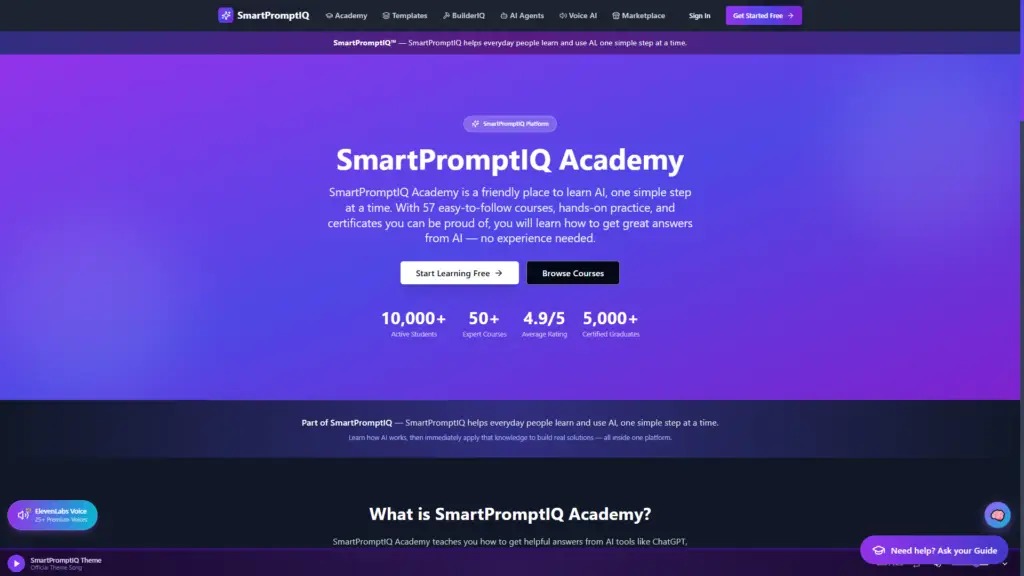
SmartPromptIQ makes this process more approachable with beginner-friendly learning resources, plain-language guidance, and practical tools. Rather than assuming you already know the jargon, it is designed to help you build knowledge at a pace that feels comfortable.
Practice the Skill of Asking Better Questions
A prompt is simply the instruction you give an AI tool. The stronger the instruction, the more useful the response is likely to be. You do not need a complicated formula, but it helps to include a goal, useful background, and the format you want.
Imagine you need a social media update. “Write a post about my business” is broad. A stronger prompt names the audience, topic, length, tone, and desired action. For a bakery, you might request a warm 75-word Facebook post about weekend cupcakes that ends with an invitation to visit.
This is a skill you improve through practice. Try a prompt, read the result, and notice what needs to change. Was it too formal? Did it miss an important detail? Was it too long? Then revise your request. Each small adjustment teaches you more about how to communicate with AI and get results you can actually use.
Choose a Simple Learning Path
When you are first figuring out how to learn artificial intelligence, it is easy to jump between too many tools and tutorials. A simpler path works better. Begin with AI basics, then practice prompt writing, then apply those skills to tasks that matter to you. Later, you can explore more focused topics such as content creation, business productivity, AI assistants, or building simple workflows.
Learning paths are useful because they replace uncertainty with a next step. You do not have to decide everything at once. Complete one lesson, try one exercise, and use what you learned on one real task. Progress can be steady without being stressful.
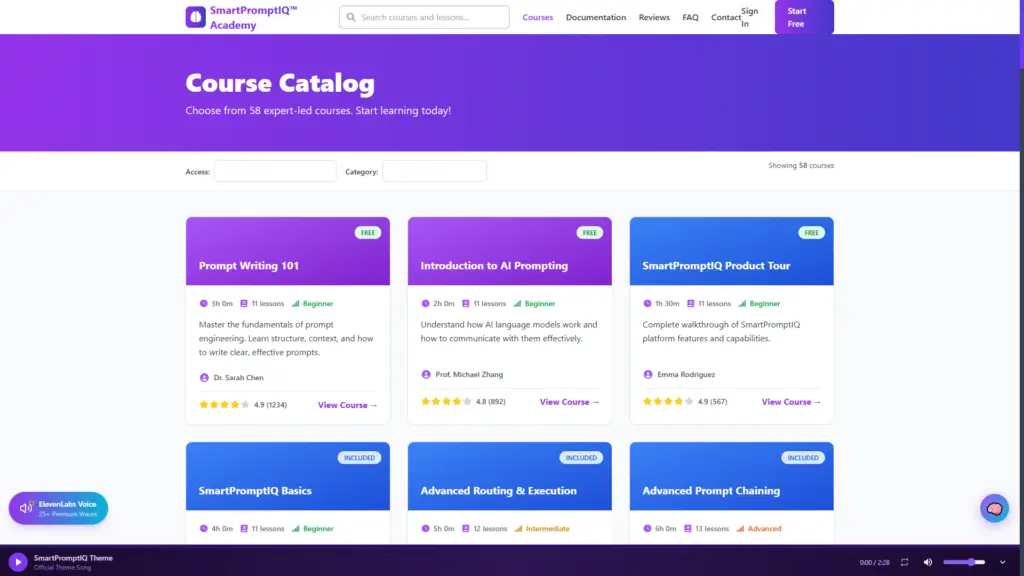
For people who prefer an easy, guided starting point, SmartPromptIQ’s AI learning platform brings courses, prompt tools, and practical pathways together in one place. You can begin with foundational ideas and keep building as your confidence grows.
Use AI Responsibly from Day One
Learning AI also means learning when to slow down. Treat AI output as a draft or suggestion, not as an unquestionable answer. Review names, dates, numbers, and important details. If a result will affect a customer, workplace decision, health question, or financial choice, take extra care and verify the information with reliable sources.
Privacy is equally important. Avoid pasting confidential work information, private financial details, passwords, or sensitive personal data into a tool unless you know how that information will be handled. Responsible habits protect you and make AI more useful over the long term.
Good judgment makes AI valuable. Careful review and refinement let you use it confidently.
Turn Small Wins into Bigger Skills
You do not need to tackle a major project to make progress. Start with one task you would like to improve. Ask AI to draft a checklist, create questions for a meeting, summarize a document, or suggest a few headline ideas. Save the prompts that work well so you can reuse them later.
Over time, those small experiments become a personal toolkit. You may create a library of prompts for email replies, content ideas, customer questions, job-search tasks, or planning projects. You can also learn to ask AI for a table, a step-by-step guide, a simplified explanation, or several options to compare. These are practical skills that grow more valuable each time you use them.
As you gain experience, you may decide to build something bigger: an AI assistant for your website, a simple workflow for recurring work, or a project plan for a new idea. The same fundamentals still apply—clear goals, useful context, careful review, and a willingness to improve.
Make Learning AI Part of Your Routine
Consistency matters more than intensity. You do not need to spend hours a day studying. Set aside a few minutes to try one new prompt, complete a short lesson, or apply AI to a task you already need to do. This makes learning feel manageable and helps new skills become familiar.
If you are ready to move from curiosity to confidence, explore SmartPromptIQ and choose a beginner-friendly path that matches your goals. With plain-language guidance, practical exercises, and tools designed for real people, it offers a welcoming place to begin.
Your First Step Starts Today
The answer to how to learn artificial intelligence is not to wait until you know everything. Start with one useful task, give AI a clear instruction, and learn from the result. Keep what works, improve what does not, and build your skills one step at a time.
AI does not have to feel like a future technology meant for someone else. With the right guidance and a practical approach, it can become a helpful part of how you learn, create, and get things done. Start learning with SmartPromptIQ and see what one simple step can make possible.