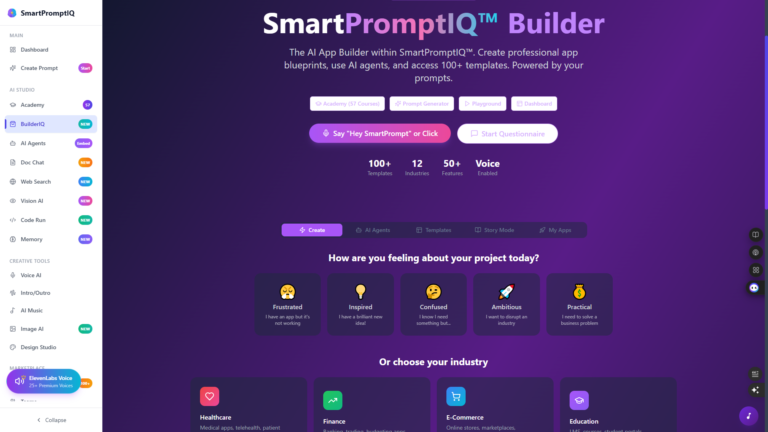
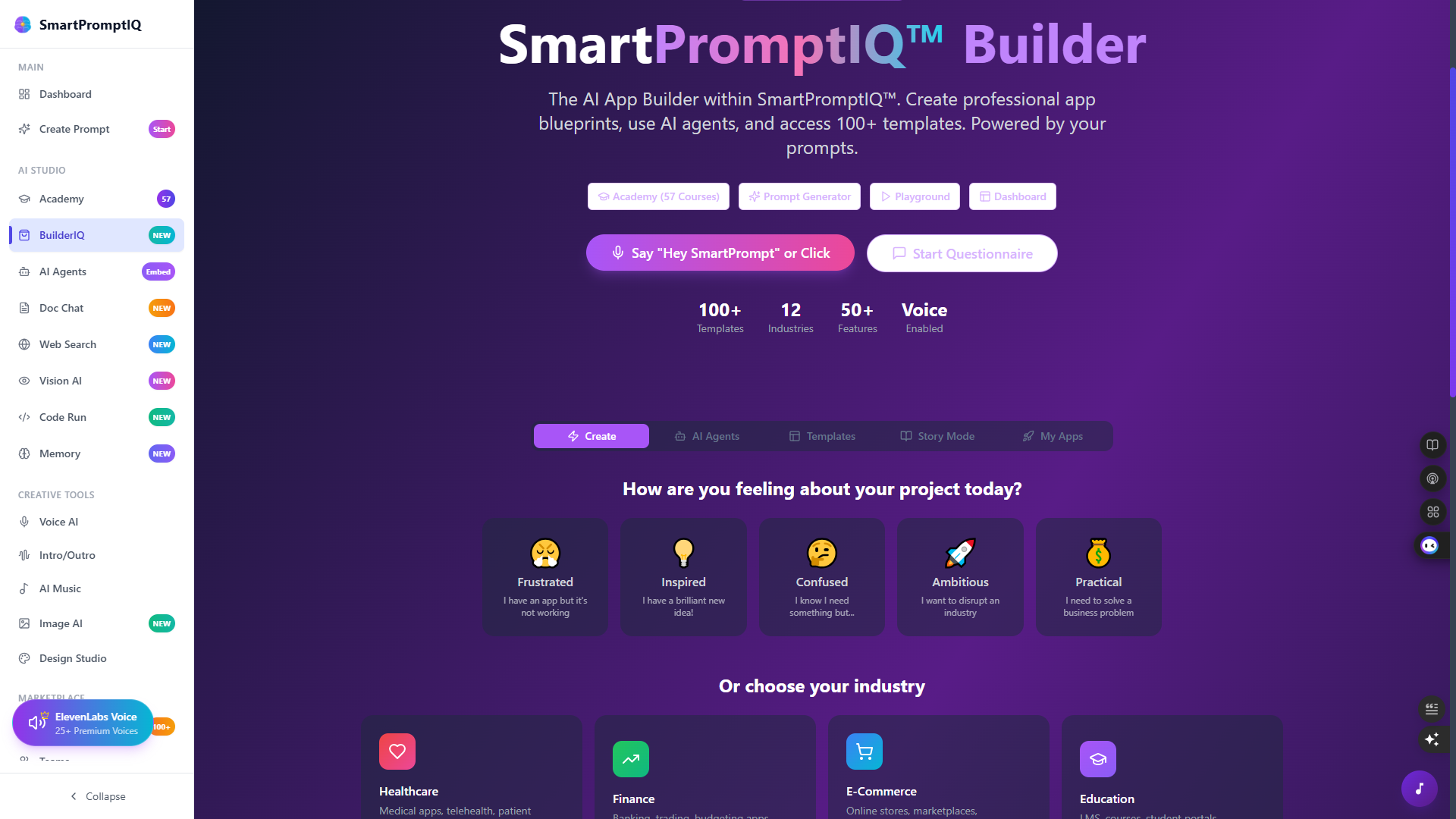
BuilderIq dashboard

Mastering Resource Management with BuilderIQ

Mastering Resource Management

SmartPromptIQ Blog  ·  Business OperationsAI Resource Management Dashboard

Introduction

In today’s fast-paced business environment, the importance of efficient resource management cannot be overstated. Whether you are running a virtual real estate investment firm like Smart Home Buyer or a tech startup, how you allocate time, money, and human capital dictates your ultimate success or failure.

Welcome to the future of operational efficiency. In this post, we provide a deep-dive introduction to BuilderIQ’s resource management capabilities. We will explore how AI is eliminating the guesswork from project planning, preventing budget blowouts, and ensuring your team is always working on the right tasks at the right time.

Typical Resource Management Issues

Before we look at the solution, we must understand the core problems that plague modern project managers and business owners.

Underutilization and Overutilization of Resources

One of the most common pitfalls is the imbalance of workloads. When some team members are buried under impossible deadlines (overutilization) while others are waiting for approvals (underutilization), overall productivity plummets. This leads to rapid burnout for top performers and wasted payroll on idle staff.

Budget Overruns

Without real-time visibility into resource consumption, projects frequently exceed their financial boundaries. By the time a project manager realizes a phase took twice as long as expected, the budget is already bleeding.

Misaligned Resource Allocation

Assigning the wrong person to a highly specialized task — or allocating premium budget to a low-priority feature — is a recipe for disaster. According to Forbes on Managing Business Resources, misaligned resource allocation is a leading cause of project failure across all industries.Project Budget Tracking Software

How BuilderIQ Transforms Resource Management

BuilderIQ isn’t just a project tracking tool; it is an intelligent operational partner. Here is how it transforms chaos into clarity.

AI-Driven Allocation and Forecasting

BuilderIQ uses advanced predictive algorithms to analyze historical project data. It can accurately forecast how long a specific task will take and automatically suggest the best team member for the job based on past performance and current availability. This AI-driven forecasting completely eliminates the “guesstimation” phase of project planning.AI Predictive Analytics Forecasting

Budget Tracking Tools

With BuilderIQ, budget tracking happens in real-time. As hours are logged and milestones are hit, the system updates financial projections instantly. If a specific project phase begins trending toward a budget overrun, BuilderIQ sends automated alerts to stakeholders before the money is spent.

Resource Optimization Dashboards

The platform features highly visual, intuitive resource optimization dashboards. Managers get a bird’s-eye view of organizational capacity, allowing them to drag-and-drop resources dynamically as priorities shift.

Want to experience this level of control? See BuilderIQ in action and discover how AI can streamline your entire operational workflow.

Resource Optimization Dashboard

Case Studies: Successful Resource Management

Theory is great, but results matter. Let’s look at how BuilderIQ is performing in the real world.

Industry-Specific Examples

In the fast-moving world of virtual real estate investing, firms must close deals across the US within tight 12-to-14-day windows. By using BuilderIQ’s automated workflows, investment teams have been able to perfectly align title agents, inspectors, and financial officers, ensuring no bottlenecks delay a closing.

Quantifiable Improvements in Efficiency

Organizations adopting these AI-driven strategies report significant gains. According to Gartner’s Resource Management Strategies, integrating AI into project management can eliminate up to 80% of routine administrative tasks. BuilderIQ users consistently report a 35% reduction in budget overruns and a 40% increase in on-time project delivery.AI Productivity Dashboard

Conclusion

BuilderIQ’s role in revolutionizing how resources are managed is undeniable. By shifting from reactive problem-solving to proactive, AI-driven forecasting, businesses can finally scale without the growing pains of operational bloat.

The steps to get started with BuilderIQ are simple: integrate your current workflows, let the AI analyze your historical data, and watch as your resource allocation becomes perfectly optimized.

Ready to Optimize Your Resources?

Stop wasting time and money on inefficient project management. Let AI do the heavy lifting.For Information Contact Us
Similar Posts

  • AI Is Changing Everything — But Seniors Are Being Left Behind. Here’s the Fix

    AI Is Changing Everything We are living through one of the most rapid technological shifts in human history. Artificial intelligence is no longer a futuristic concept confined to research labs; it is actively rewriting the rules of how we work, how we communicate, and how we access information. However, beneath the headlines celebrating unprecedented productivity…

  • The AI Scams No One Warned Your Parents About — Until Now

    AI Scams Every generation faces its own unique technological threats, but the current wave of digital fraud targeting older adults is entirely unprecedented. We are no longer dealing with poorly translated emails from fictitious foreign princes or obvious pop-up ads claiming a computer has crashed. Instead, we are entering an era where artificial intelligence allows…

  • The Rise of No-Code AI: How to Build Custom Workflows with BuilderIQ (No Coding Required)

    Introduction: The Democratization of  Artificial Intelligence For decades, the power to create software was gatekept by a select group of people: software engineers. If you had a brilliant idea for a digital tool, you either had to spend years learning Python or C++, or you had to spend tens of thousands of dollars hiring a development team. The artificial intelligence boom initially looked like it would follow the exact same path. However, a massive shift is occurring in the tech landscape: the convergence of AI and the “no-code” movement. According to a recent projection by Gartner, low-code and no-code development will account for over 65% of all application development functions by the end of 2024. We are entering an era where your ability to build powerful, automated AI tools is limited only by your imagination, not your coding ability. Enter the era of the custom AI builder. In this comprehensive guide, we will explore why generic AI chatbots are no longer enough, and how platforms like BuilderIQ are empowering non-technical founders, marketers, and operators to build their own bespoke AI applications. The Problem with “Out-of-the-Box” AI Chatbots When ChatGPT first launched, it was a revelation. But as businesses have integrated AI into their daily operations, the limitations of “blank canvas” chatbots have become glaringly obvious. 1. The “Blank Page” ParalysisEvery time you open a generic AI interface, you start from scratch. You have to re-explain your brand voice, your target audience, and the specific formatting you require. This repetitive setup leads to a phenomenon known as “prompt fatigue.” 2. Inconsistent OutputsIf three different employees ask a public AI model to write a customer service response, you will get three wildly different tones. This inconsistency dilutes brand identity and creates quality control nightmares for management. 3. Data Silos and Disconnected WorkflowsGeneric AI doesn’t naturally speak to the rest of your tech stack. It sits in a silo. You copy data from an email, paste it into the AI, copy the output, and paste it into a Google Doc. This manual friction defeats the purpose of automation. Enter BuilderIQ: Your Personal AI Architect To solve these problems, businesses are moving away from prompting generic models and moving toward building custom AI agents. This is exactly what BuilderIQ is designed to do. BuilderIQ is a no-code environment that allows you to pre-package complex prompt engineering, context framing, and brand constraints into a single, repeatable tool. Think of it as creating a custom app that lives on top of the world’s smartest language models. How to Build Your First AI Tool in  BuilderIQ (Step-by-Step) You don’t need an engineering degree to build an AI tool. Here is a look at the typical workflow a non-technical professional uses within BuilderIQ. Step 1: Define the Core FunctionBefore touching the software, identify a repetitive, high-friction task in your business. For this example, let’s say you run an e-commerce store and you spend 10 hours a week writing SEO-optimized product descriptions. Step 2: Establish the “System Context”Inside BuilderIQ, you begin by setting the foundational knowledge of the AI. Instead of typing this every time, you hardcode it into the builder. You can define your brand archetype, paste your style guide, and tell the AI exactly who your target demographic is. Step 3: Define the Input FieldsInstead of a scary, open-ended chatbox, BuilderIQ allows you to create specific input fields for you or your team. For our product description tool, you might create three simple fields: Step 4: Design the Output ArchitectureHere is where the magic happens. You instruct the builder on exactly how to format the final result. You can demand that it outputs a catchy H1 title, a 50-word emotional hook, a bulleted list of benefits, and a call-to-action—every single time. The Business Impact of Custom AI…

  • Enhancing Data Security with Master Prompt Engineering

    As AI has made great strides, with data breaches and cyber-attacks dominating headlines, organisations must constantly elevate their security posture. One emerging frontier is the discipline of prompt engineering—and when applied rigorously, “Master Prompt Engineering” becomes a strategic shield for your sensitive information. At SmartPromptIQ and its educational arm SmartPromptIQ Academy, we specialise in helping…

  • The Hidden Dangers of Modern Phishing — And How SmartPromptIQ’s Chrome Extension Stops Them Instantly

    Phishing used to be easy to spot. A strange email, a suspicious link, a message full of spelling errors — most people could identify a scam before falling for it. But today’s phishing attacks are powered by AI, designed by organized cybercrime groups, and engineered to mimic legitimate communication so closely that even tech‑savvy users…

Leave a Reply

Your email address will not be published. Required fields are marked *