The AI Scams No One Warned Your Parents About — Until Now
AI Scams

Every generation faces its own unique technological threats, but the current wave of digital fraud targeting older adults is entirely unprecedented. We are no longer dealing with poorly translated emails from fictitious foreign princes or obvious pop-up ads claiming a computer has crashed. Instead, we are entering an era where artificial intelligence allows scammers to weaponize trust, familiarity, and fear with terrifying precision. For adult children trying to protect their aging parents, the old advice of simply “don’t click unknown links” is no longer enough.
The financial toll of this shift is staggering. According to the Federal Bureau of Investigation’s recent reporting, Americans age 60 and older lost nearly $7.75 billion to online scams in 2025 alone [1]. However, the emotional toll is often much worse. When a senior realizes they have been deceived by a voice that sounded exactly like their grandchild, or a message that looked identical to their bank’s official communication, the resulting shame can lead to isolation and a profound loss of digital confidence.
To combat this, families need to understand exactly how these new threats operate. By bringing these hidden dangers into the light, adult children can have informed conversations with their parents, and organizations can provide better protection. Platforms like SmartPromptIQ are stepping into this gap, offering tools designed specifically to help older adults spot deception before it causes harm.
The Core Threats: How AI Weaponizes Trust
Artificial intelligence is not inherently malicious, but in the hands of a scammer, it acts as a force multiplier. It allows criminals to automate their attacks, personalize their messages, and bypass traditional red flags. Here are the core AI-driven scams that are currently devastating families across the country.
1. Voice Cloning: The Ultimate Betrayal
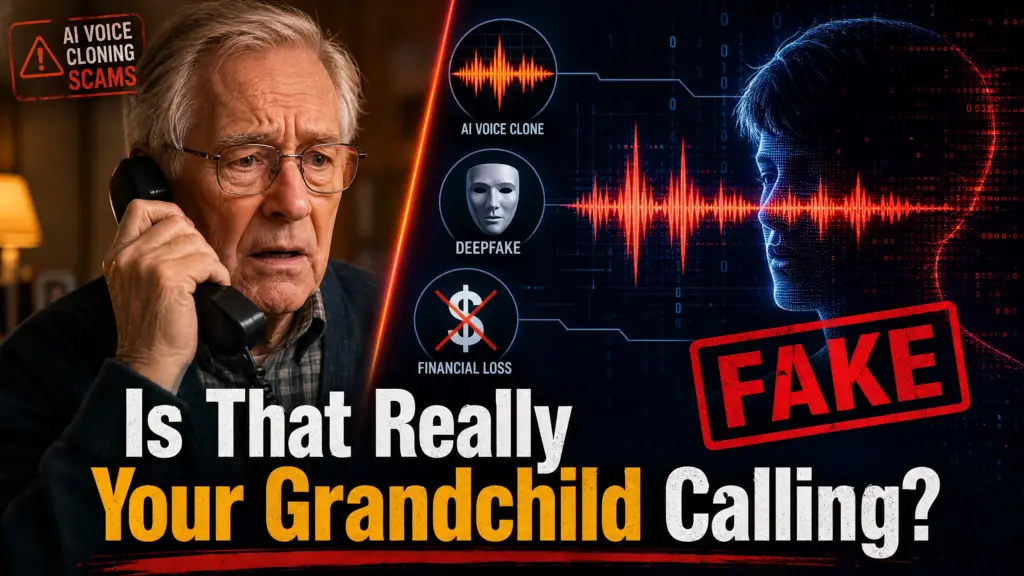
Perhaps the most insidious use of AI in elder fraud is voice cloning. In the past, the “grandparent scam” relied on a panicked, muffled voice claiming to be a relative with a bad connection. Today, scammers only need a three-second audio clip—easily scraped from a public Facebook video, a TikTok post, or a voicemail greeting—to create a near-perfect synthetic replica of someone’s voice.
The scammer then calls the older adult, using the cloned voice to manufacture a crisis. The synthetic voice might claim they have been in a car accident, are locked in a foreign jail, or urgently need money for a medical procedure. They almost always beg the grandparent not to tell their parents, isolating the victim and preventing verification. According to security researchers, one in three people who engage with these AI-powered calls end up losing money, with average losses exceeding $18,000 [2]. When the voice on the other end of the line sounds exactly like someone you love, logical skepticism is instantly overridden by the instinct to protect.
2. Fake Medicare and Government Messages
Scammers know that older adults are generally respectful of authority and fearful of losing essential benefits. AI text generators allow fraudsters to craft flawless, highly personalized text messages and emails that appear to come directly from Medicare, the Social Security Administration, or the IRS. These messages are completely free of the grammatical errors that used to give away phishing attempts.
These fake messages often claim that a Medicare card needs to be replaced immediately, or that Social Security benefits will be suspended unless the recipient clicks a link to verify their identity. Once the link is clicked, the victim is directed to a fraudulent website designed to harvest their Social Security number and financial details. The Federal Trade Commission has repeatedly warned that government agencies will never demand immediate payment or sensitive information via text message or email [3].
3. Deepfake Romance Scams
Romance scams have existed for decades, but AI has supercharged their effectiveness. Scammers use AI image generators to create entirely fictitious, highly attractive personas. They then use AI chatbots to maintain dozens of simultaneous conversations with lonely older adults on dating apps or social media platforms.
These AI personas are infinitely patient, highly attentive, and programmed to build deep emotional connections over weeks or months. Once the victim is emotionally invested, the scammer invents a sudden crisis—a frozen bank account, a medical emergency abroad—and requests a wire transfer or cryptocurrency payment. Because the victim believes they are helping someone they love, they often ignore warnings from family members.
4. Next-Generation Tech Support Pop-ups
Tech support scams remain one of the most common ways older adults lose money. The FTC reports that consumers 60 and older are five times more likely than younger people to report financial losses from these specific traps [4]. AI has made these scams far more sophisticated.
Instead of generic pop-ups, AI can tailor the alert to the user’s specific operating system and browser, making the warning look like an official system notification. The pop-up typically claims the computer is locked due to a severe virus and provides a toll-free number to call. When the victim calls, they are connected to a fraudulent call center where scammers use high-pressure tactics to gain remote access to the computer and steal banking credentials.
5. Hyper-Personalized Bank Fraud Alerts
Similar to government impersonation, scammers use AI to send text messages that perfectly mimic a bank’s automated fraud alert system. The message might ask, “Did you authorize a $500 payment to Target? Reply YES or NO.” When the panicked victim replies “NO,” the scammer immediately calls them, spoofing the caller ID so it appears to be the bank’s actual customer service number.
The scammer then guides the victim through a series of steps to “secure” their account, which actually involves the victim unwittingly transferring their own funds to the scammer’s account via Zelle or wire transfer. Because the victim believes they are actively stopping a fraud, they are highly compliant.
Positioning for Protection: The SmartPromptIQ Advantage
The sophistication of these AI scams means that traditional advice is failing. Telling a parent to “be careful” is not actionable advice when the threat looks and sounds exactly like reality. What older adults need are simple, effective tools that intercept deception before it triggers an emotional response. This is where SmartPromptIQ’s Fraud Analyzer fundamentally changes the dynamic.

The Fraud Analyzer: A Digital Second Opinion
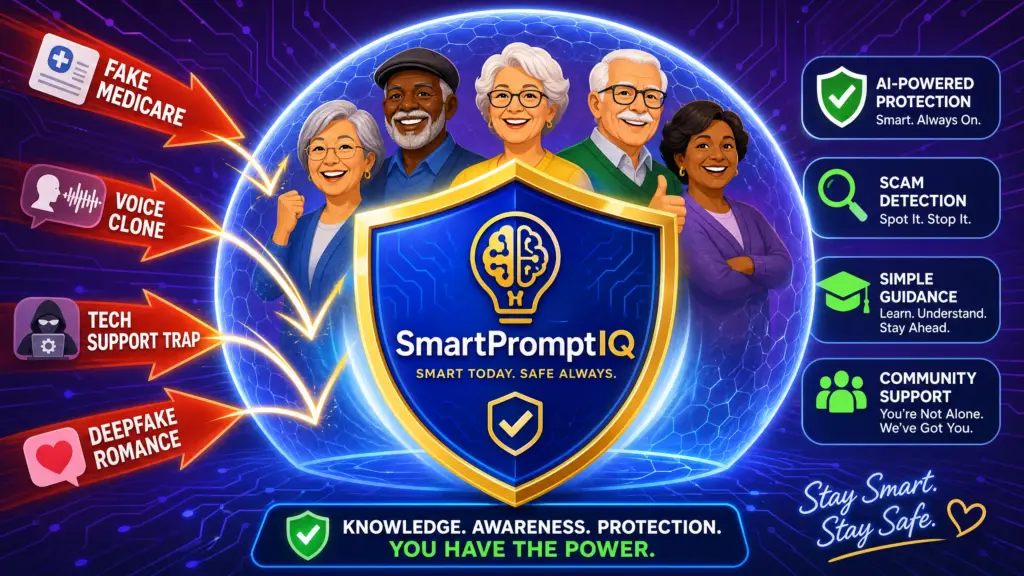
When an older adult receives a terrifying text message from “Medicare” or a confusing alert from their “bank,” their first instinct is often to act quickly to resolve the problem. The SmartPromptIQ Fraud Analyzer provides a crucial pause. By simply pasting the suspicious text, email, or screenshot into the tool, the user receives an immediate, plain-language assessment of the message.
The analyzer does not use confusing technical jargon. Instead, it clearly identifies the manipulative tactics at play—such as false urgency, demands for unusual payment methods, or requests for secrecy. It acts as an objective, digital second opinion, allowing the senior to step back from the emotional ledge and see the scam for what it is. This is a critical component of building an effective AI business system for personal security.
The Family Code Word: Defeating Voice Clones
To combat the terrifying reality of voice cloning, SmartPromptIQ strongly advocates for the implementation of a Family Code Word. This is a remarkably simple, zero-tech solution to a high-tech problem. Families agree on a unique, memorable word or phrase.
If an older adult receives a frantic call from someone sounding exactly like their grandchild demanding money, they simply ask for the code word. A real family member will know it immediately; an AI voice clone operated by a scammer in a foreign call center will not. This single habit can completely neutralize the threat of voice cloning.
AI Staff Fraud Agent and Safety Mode
For adults who want more proactive protection, the concept of an AI Staff Fraud Agent offers a glimpse into the future of personal cybersecurity. Just as scammers use AI to automate their attacks, older adults can use defensive AI to automatically screen incoming communications, flag known malicious numbers, and quarantine suspicious emails before they ever reach the inbox.
Furthermore, platforms that offer a dedicated “Safety Mode” ensure that the interface remains clean, accessible, and free of the confusing dark patterns that often lead to accidental clicks or unintended subscriptions. This approach aligns perfectly with the need for accessible prompt engineering tools that prioritize user safety over complex functionality.
A Call to Action for Families and Organizations
The burden of protecting older adults from AI scams cannot rest solely on the seniors themselves. Adult children must initiate open, non-judgmental conversations about these specific threats. Share this information with your parents. Explain how voice cloning works, not to frighten them, but to empower them with the knowledge that a familiar voice is no longer absolute proof of identity.
Organizations, senior living communities, and financial institutions also have a profound duty of care. They must move beyond generic security brochures and start integrating actionable tools like the SmartPromptIQ Fraud Analyzer into their community resources. By providing seniors with accessible ways to verify information, organizations can significantly reduce the financial and emotional devastation caused by these scams.
Try SmartPromptIQ AI Staff free and Download 50 AI Staff workflows to start your journey toward confident and safe AI usage today! Explore the possibilities at SmartPromptIQ AI Staff.
References
[1] AARP: FBI Report, Internet Crime Losses Hit $20.9 Billion
[2] WFTV: AI Voice Cloning Scams Cost Victims Millions
[3] Federal Trade Commission: Scammers Impersonating Government Agencies
[4] FTC: Protecting Older Consumers 2024–2025