
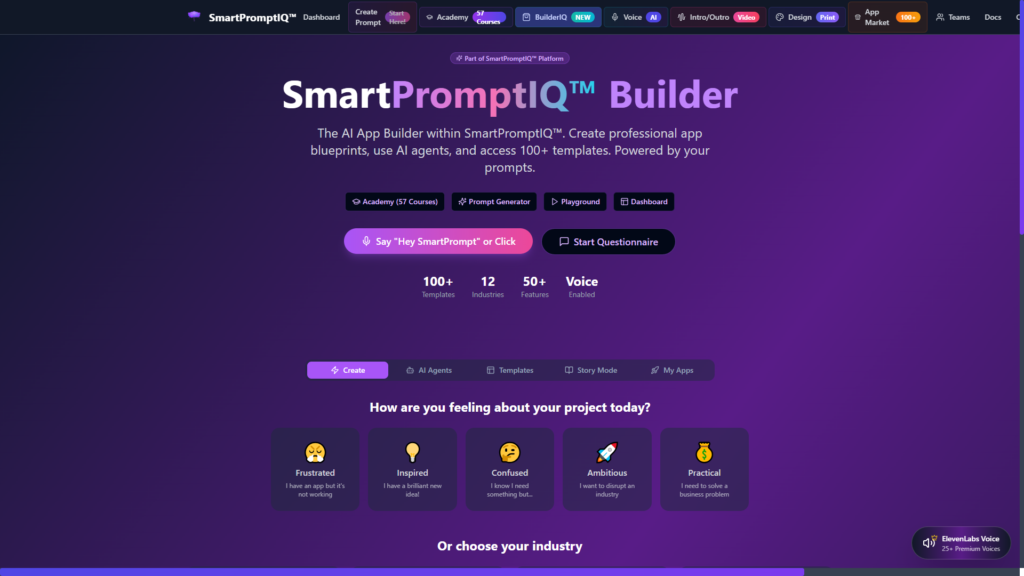
I’ve had the same idea sitting in my notes app for over a year. A simple tool — an AI-powered client intake form that would ask smart follow-up questions based on the answers it received. Nothing groundbreaking. Just useful.
You know why it sat there for a year? Because every time I looked into building it, I hit the same wall. Hire a developer? That’s $50,000 minimum and three months of back-and-forth. Learn to code it myself? I’d need six months just to get the basics down. Use a template? Sure — if I wanted something generic that didn’t actually do what I needed.
That wall is the reason millions of great ideas never become real products. And it’s exactly why we built BuilderIQ at SmartPromptIQ — to tear that wall down completely.
Here’s how the landscape has shifted, and how you can go from idea to working AI app in minutes, not months.
The Old Way of Building Apps Is Broken
Let’s be real about what traditional app development actually looks like in 2025.
According to Topflight Apps, most app projects today land somewhere between $10,000 and $500,000, with the average cost for a functional app sitting around $80,000. And that’s just the build — it doesn’t include ongoing maintenance, bug fixes, server costs, or the inevitable “actually, can we change this one thing” requests that double the timeline.
A GoodFirms survey found that even a simple app takes three to seven weeks to develop when you’re working with a traditional dev team. A complex one? You’re looking at months. And during that time, your idea is aging. Your market is moving. Your competitors who figured out faster tools are already shipping.
This isn’t a minor inconvenience. It’s a structural problem. The gap between “I have a great idea” and “people can actually use this” has been way too expensive and way too slow for way too long.
Then No-Code AI Changed Everything
Here’s the shift that most people still haven’t caught up to: the no-code AI app builder market isn’t a niche trend anymore. It’s the new default.
Fortune Business Insights valued the global no-code AI platform market at $6.56 billion in 2025, projecting it to grow to over $75 billion by 2034 at a 31% annual growth rate. That’s not gradual adoption — that’s an industry being rebuilt from the ground up.
Gartner research projects that by 2026, 70% of new business applications will be built using no-code or low-code tools. And 80% of the people building those apps won’t even be in IT departments. They’ll be marketers, founders, operations managers, and freelancers who simply got tired of waiting for someone else to build what they could see clearly in their heads.
The reason is straightforward. No-code AI platforms cut development time by up to 90% according to industry data. What used to take a team of developers three months now takes one person an afternoon. Not because the quality is lower — because the tools finally got smart enough to handle the heavy lifting.
What Makes an AI App Generator Different From Old No-Code Tools
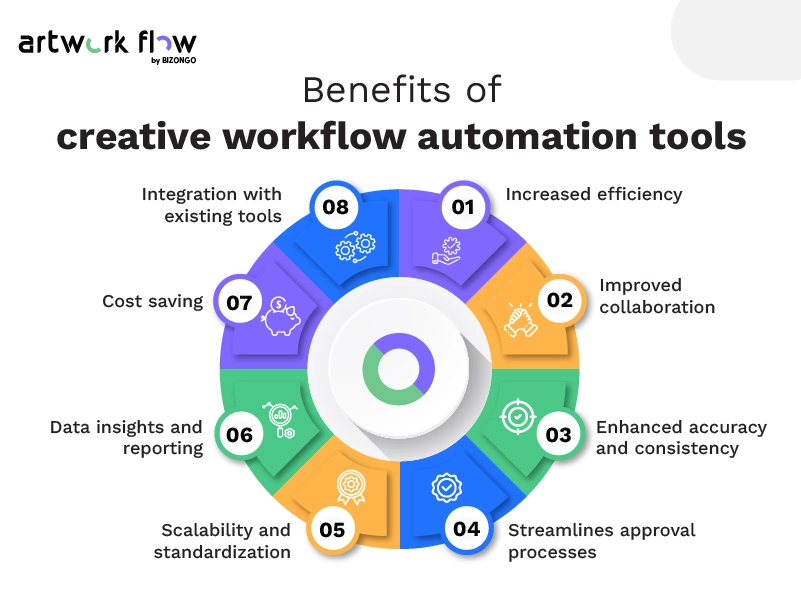
If you’ve tried no-code tools before and walked away underwhelmed, I get it. A lot of the early platforms gave you drag-and-drop page builders that could make a decent-looking website but couldn’t do anything intelligent.
The new generation of no-code AI tools — the real AI app generators — are fundamentally different. They don’t just let you arrange elements on a screen. They understand what you’re trying to build and help you architect the logic, workflows, and intelligence behind it.
Think about the difference. Old no-code: “Drag this button here, connect it to this database.” New AI-powered no-code: “I want a tool that takes customer feedback, categorizes the sentiment, routes negative feedback to my support team, and drafts a personalized response.” The AI figures out the structure, the data flow, and the logic. You refine and launch.
That’s the leap. You’re not manually wiring things together anymore. You’re describing outcomes, and the AI app builder generates the blueprint to make them happen.
How BuilderIQ Turns Your Idea Into a Working App
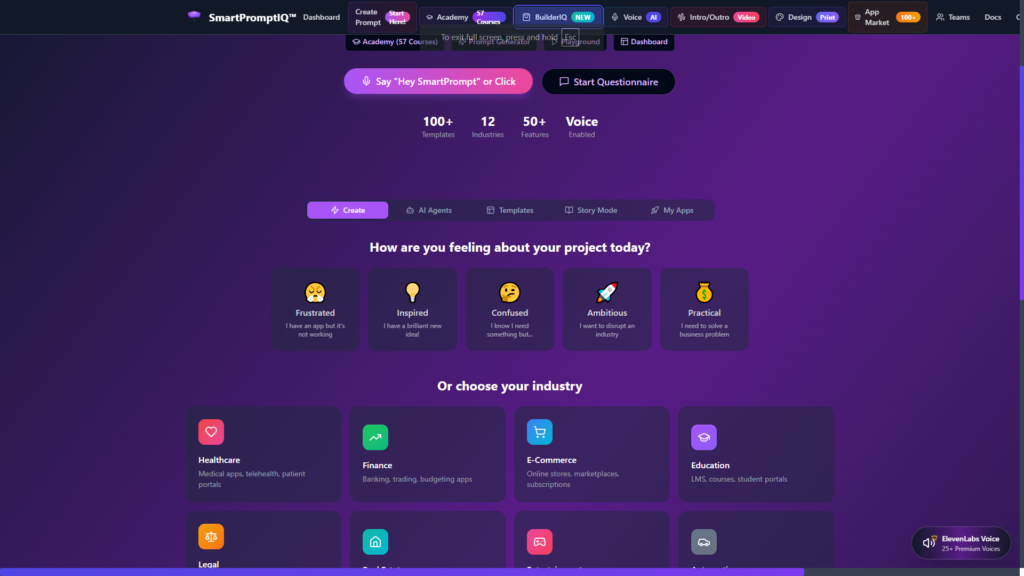
This is where I get to talk about what we’ve actually built at SmartPromptIQ — and I’m going to walk you through a real example because I think that’s more useful than a feature list.
Let’s say you’re a freelance consultant and you want to build an AI-powered proposal generator. You want clients to fill out a brief questionnaire, then have AI draft a custom proposal based on their answers, your services, and your pricing structure.
Here’s what that process looks like with BuilderIQ:
Step 1: Describe your app. You tell BuilderIQ what you want in plain language. “I need a tool where clients answer five questions about their project, and then AI generates a custom proposal based on my service packages and rates.” That’s it. No wireframes. No technical specs. Just a clear description of the outcome.
Step 2: BuilderIQ generates your app blueprint. This is where the magic happens. BuilderIQ takes your description and creates a complete app blueprint — the data structure, the user flow, the AI logic, the input/output design. You can see exactly how your app will work before anything is built. It’s like getting architectural drawings for your house before a single nail goes in.
Step 3: Review and customize. The blueprint isn’t a black box. You can tweak every part of it. Want to add a step where the AI asks a follow-up question if the budget seems unclear? Add it. Want to change the tone of the generated proposals from formal to conversational? Adjust it. You’re in control of the details without needing to understand the code underneath.
Step 4: Launch. Your app is live. Clients can use it immediately. You just built something that would have cost you thousands of dollars and weeks of development time — in minutes.
That’s not a hypothetical. That’s how BuilderIQ works, and it’s why we designed it this way.
Real Ideas People Are Building Right Now
The proposal generator is one example, but the range of what people are creating with no-code AI tools right now is wild. Here’s a sampling of real use cases:
Personalized onboarding flows. Small agencies are building AI-powered onboarding sequences that adapt based on the client’s industry, team size, and goals. Instead of sending the same generic welcome packet to everyone, the app tailors the entire experience.
Internal knowledge bases. Teams are creating apps where employees can ask questions in natural language and get answers pulled from company documents, SOPs, and past project files. It’s like building a custom ChatGPT that only knows about your business.
Lead qualification tools. Solopreneurs and sales teams are building apps that take inbound leads through a smart questionnaire, score them based on fit, and automatically route hot leads to the calendar while nurturing cold ones with automated content.
Content repurposing engines. Content creators are building tools that take a single long-form piece — say, a blog post or podcast transcript — and generate social posts, email newsletters, and ad copy automatically, all matched to their brand voice.
Every one of these would have required a developer twelve months ago. Now they require a description and a few minutes of refinement.
Why App Blueprints Matter More Than You Think
I want to zoom in on the app blueprint concept for a second because I think it’s the most underrated part of this whole process.
Most people who try to build something — whether they’re coding it or using a drag-and-drop tool — skip the architecture phase entirely. They jump straight into building and end up with something that works for a week before the cracks start showing. The logic doesn’t scale. The data isn’t structured right. The user flow has dead ends.
A blueprint solves that. It forces clarity before construction. And when AI generates the blueprint, it’s drawing on patterns from thousands of successful app architectures. It’s not just organizing your idea — it’s optimizing it based on what actually works.
At SmartPromptIQ, we treat the blueprint as the most important output BuilderIQ produces. Because an app is only as good as the thinking behind it.
The Cost Equation Has Flipped
Let me put this in financial terms, because I know that matters.
Traditional route: $30,000 to $300,000+. Development time: weeks to months. Maintenance: ongoing developer costs. Changes: expensive and slow.
No-code AI route with BuilderIQ: A fraction of the cost. Development time: minutes to hours. Maintenance: built into the platform. Changes: instant.
The Stack Overflow Developer Survey 2025 showed that 84% of developers are now using or planning to use AI tools — even the people who write code for a living recognize that AI is changing how software gets built. If the professionals are adopting it, that tells you something about where this is all headed.
You don’t need to wait for the economics to make sense anymore. They already do.
Your Idea Deserves to Exist
Here’s what I really believe: the world has lost millions of useful, clever, meaningful apps because the barrier to building them was too high. People with real problems and real solutions were locked out because they couldn’t code and couldn’t afford to hire someone who could.
That era is ending. The tools exist now. The AI is smart enough now. And platforms like SmartPromptIQ are designed specifically to close the gap between your idea and a working product.
If you’ve been sitting on an idea — that tool, that app, that workflow that would make your life or your customers’ lives better — stop waiting. The cost of not building it is higher than you think.
Generate your first app blueprint free →
Your idea has been patient long enough. Let’s make it real.
The time has come for innovators to take action without the constraints of traditional development barriers. With the advent of intuitive platforms, transforming your vision into a functional AI application is not only feasible but also efficient. Embrace this opportunity to bring your concepts to life, unlocking potential solutions that can significantly enhance user experiences. Don’t let your idea remain unrealized; seize the moment and watch it flourish.