How Adults 50+ Can Outsmart AI Scams and Build Real Digital Confidence
AI Scams

Artificial intelligence is changing everyday life at remarkable speed. For adults over 50, that change brings a double reality. On one hand, AI can make daily tasks easier, support learning, improve communication, and open new income opportunities. On the other hand, the same technology is making fraud more believable, more personal, and more dangerous. That combination is exactly why digital confidence now matters as much as digital access.
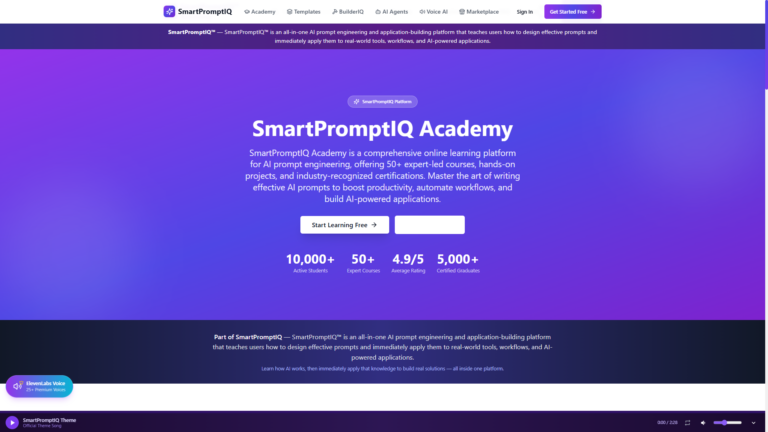
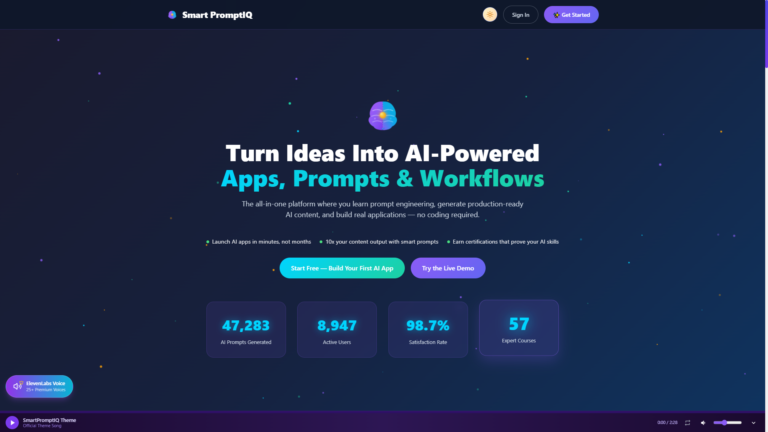
SmartPromptIQ has already recognized this need in two important ways. Its fraud-check tool gives people a simple way to evaluate suspicious messages, while its AI learning page for adults 50+ focuses on plain-language education for beginners. Together, those ideas point to a smarter model for online safety: do not ask older adults to avoid technology altogether. Instead, help them use it with clarity, caution, and confidence.
The scale of the problem is impossible to ignore. In 2025, Americans age 60 and older reported $7.748 billion in fraud losses, according to reporting that cited the FBI’s latest internet crime data . The Federal Trade Commission has also found that older adults are especially vulnerable in particular categories, including tech support scams, where consumers age 60 and older were far more likely than younger adults to report losing money [2]. These losses are not just numbers. They represent drained savings, shaken confidence, and a growing fear that every message, call, or pop-up could be a trap.
Why AI scams feel more believable than older scams
Traditional scam messages often contained obvious spelling mistakes, generic greetings, and awkward language. AI has changed that. Today’s fraudulent emails and texts can sound polished, natural, and highly targeted. A scammer can use AI to imitate the tone of a bank, rewrite a fake billing notice, or produce multiple variations of the same message until one sounds convincing. The result is a fraud experience that feels less random and more personal.
Voice cloning raises the stakes even further. A short audio sample taken from social media or a voicemail greeting can be enough to imitate someone’s voice. That makes the classic “grandparent scam” more persuasive because a panicked caller may now sound like a real grandchild asking for emergency money. One recent television report on AI voice-cloning scams noted that losses from these interactions can be severe, with some victims losing large sums after believing the call was genuine [3]. When emotion overwhelms verification, even cautious people can act too quickly.
Key takeaway: AI does not invent new human weaknesses. It magnifies urgency, fear, trust, and confusion. That is why education works: the technology changes, but the pressure tactics stay familiar.

The warning signs every older adult should know
Even when the wording sounds polished, most scams still follow the same pattern. They create pressure, isolate the target, and demand action before the target has time to think. That is why the best defense is not technical expertise. It is a calm, repeatable checklist.
| Red Flag | What It Usually Means | Safer Response |
|---|---|---|
| Urgent demand for payment | The scammer wants panic, not verification | Stop the conversation and contact the company directly using a known number |
| Payment by gift card, wire, crypto, or app | These methods are hard to reverse and favored by fraudsters | Refuse the request and check with a trusted family member or bank representative |
| “Do not tell anyone” instructions | Isolation prevents someone else from spotting the lie | Pause and tell someone immediately |
| Unexpected account lockout or fake security alert | The message is trying to push a rushed click or phone call | Go to the official website yourself instead of using the message link |
This is where a plain-language tool can make a real difference. The SmartPromptIQ fraud page is useful because it simplifies the first step. Instead of forcing users to decode technical jargon, it tells them whether a message shows common scam patterns such as fake authority, secrecy, tech support pressure, or unusual payment requests. That approach matters for older adults because simplicity often determines whether a safety tool is actually used.
Why AI literacy is now a safety skill
Too many conversations treat AI education as optional or only relevant to younger workers. That is a mistake. Learning how AI works at a basic level is now part of consumer protection. If someone understands that voices can be cloned, that messages can be machine-written, and that “official-looking” wording proves nothing, that person becomes much harder to exploit.
At the same time, AI literacy is not only defensive. It also creates opportunity. A 2025 University of Michigan poll found that more than half of adults age 50 and older said they had used AI technologies that you speak or type to for a variety of purposes [4]. That matters because adoption is already happening. The question is no longer whether older adults will encounter AI. The real question is whether they will encounter it with guidance or without it.

What practical AI education should look like for adults 50+
Good AI education for older adults should begin with usability, not hype. People do not need a lecture on models, tokens, or complex prompt frameworks to benefit from modern tools. They need large text, clear buttons, examples that relate to real life, and lessons that show immediate value. That is why the beginner-centered approach on SmartPromptIQ’s adults 50+ page is so important. It frames AI as something understandable, useful, and manageable rather than mysterious.
For many users, the most valuable entry points are practical ones: writing a clearer email, understanding a confusing letter, organizing notes, improving a resume, or exploring a small business idea. These are not abstract technology goals. They are everyday confidence goals. When older adults succeed with these tasks, they stop seeing AI as something made for other people and begin seeing it as a tool they can direct safely.
That also connects directly to workforce re-entry and financial resilience. Research from AARP has emphasized that AI is reshaping the future of work for people age 50-plus, creating both concern and opportunity [5]. Adults returning to work, building side income, or supporting family members can benefit from guided AI help with resumes, communication, planning, and organization. In that context, digital literacy is not just about staying safe online. It is about remaining economically and socially included.
Simple habits that reduce risk immediately
The most effective fraud-prevention habits are simple enough to repeat under stress. First, never trust urgency on its own. A legitimate bank, government agency, or family member can survive a five-minute pause while you verify the claim. Second, create a family code word for emergencies so that a fake distressed call can be tested immediately. Third, never use the phone number or link supplied in a suspicious message; find the official contact information yourself. Fourth, when something feels emotionally loaded, ask another person before acting.
These habits work even better when paired with supportive tools. A site like SmartPromptIQ can help adults move from fear to process. A beginner does not need perfect judgment every time. A beginner needs a repeatable way to slow down, check the message, and choose the next step wisely. That is what real digital independence looks like.
Confidence, not avoidance, is the better long-term strategy
Older adults are often told to be careful online, but caution without education can easily turn into avoidance. Avoidance may feel safe in the short term, yet it can also deepen dependence on others and reduce access to tools that save time, support communication, and create opportunity. A better approach is confident participation: learn the warning signs, use beginner-friendly AI tools, verify before acting, and continue building practical skills over time.
The strongest message from both of the SmartPromptIQ pages you shared is that older adults do not need to choose between safety and progress. They can have both. With the right fraud checks, the right learning environment, and the right support systems, adults 50+ can spot deception faster and use AI more productively in everyday life. That is the future worth building.
Call to action: Want a safer and simpler entry point into AI? Explore SmartPromptIQ AI Staff and pair it with beginner-friendly learning and scam awareness so every next step online feels more informed and more secure.
References
[1] AARP: FBI Report, Internet Crime Losses Hit $20.9 Billion
[2] FTC: Protecting Older Consumers 2024–2025
[3] WFTV: AI Voice Cloning Scams Cost Victims Millions
[4] University of Michigan National Poll on Healthy Aging: How Older Adults Use and Think About AI
[5] AARP: AI and the Future of Work for Workers Age 50-Plus